A roach crossing the kitchen counter at midnight is rarely alone; German cockroaches multiply so quickly that a few sightings usually mean an established population behind the appliances. Solving that takes more than a spray can.
Pest Czar treats cockroach infestations across Baltimore and central Maryland with an inspection-first program built on gel baits, insect growth regulators (IGRs), monitoring, HEPA vacuuming, and scheduled follow-up, matched to the exact species in your home. One-time treatments carry a 30-day warranty with free re-service, and the free inspection that starts every job can often happen the same day you call (443) 377-3365.
Cockroach Service at a Glance
| Question Buyers Ask | The Short Answer |
|---|---|
| What does it cost? | One-time visits typically $150 to $400; severe German roach jobs $400 to $600+; exact quote at the free inspection |
| How fast does it work? | Noticeable knockdown within about 2 weeks; heavy infestations may need multiple visits over 4 to 6 weeks |
| Is there a warranty? | 30-day warranty with free re-service on one-time treatments; Czar Guard members get re-service between any scheduled visits |
| Which roaches are covered? | German, American, and Oriental cockroaches, the three species found in Maryland homes |
| Do I have to empty cabinets? | Light preparation only; baiting programs need far less prep than old-style spray jobs |
| Who performs the work? | Licensed Maryland applicators from a QualityPro and GreenPro certified company |
What a Cockroach Treatment Visit Includes
Every roach job starts by finding where the population actually lives, because bait placed in the wrong spot feeds nothing. The technician inspects interior and exterior hot spots (under and behind appliances, sink cabinets, wall penetrations, drains, and utility rooms), then builds the treatment from these verified Pest Czar methods:
- Cockroach gel baits worked into the cracks and crevices where roaches harbor
- Insect growth regulator (IGR) discs that stop nymphs from maturing and reproducing
- Bait discs and granular insect bait where gel placement is impractical
- Glue-board insect monitors that measure activity between visits
- HEPA-filtered vacuuming to physically remove live roaches, egg cases, and droppings from heavy harborage
- Targeted liquid and dust applications limited to cracks, crevices, and voids
- Deterrent product applied around entry points, with sealing of cracks and crevices (up to one linear foot annually) using caulk or cement
Nothing on that list is fogging or baseboard drenching. Baiting programs outperform over-the-counter sprays because roaches carry bait back to hidden harborage, and the EPA’s pest control guidance specifically favors baits and targeted treatments over broadcast spraying inside homes.
Which Roach Is in Your Kitchen? It Changes the Treatment
Three species account for nearly every Maryland cockroach call, and the University of Maryland Extension cockroach guide is a good identification reference:
- German cockroach. Half an inch, tan with two dark stripes behind the head. The apartment and restaurant roach, and the only one of the three that breeds prolifically indoors. German cockroaches lean hardest on gel bait plus IGR, because each egg case carries dozens of nymphs and any surviving female restarts the infestation.
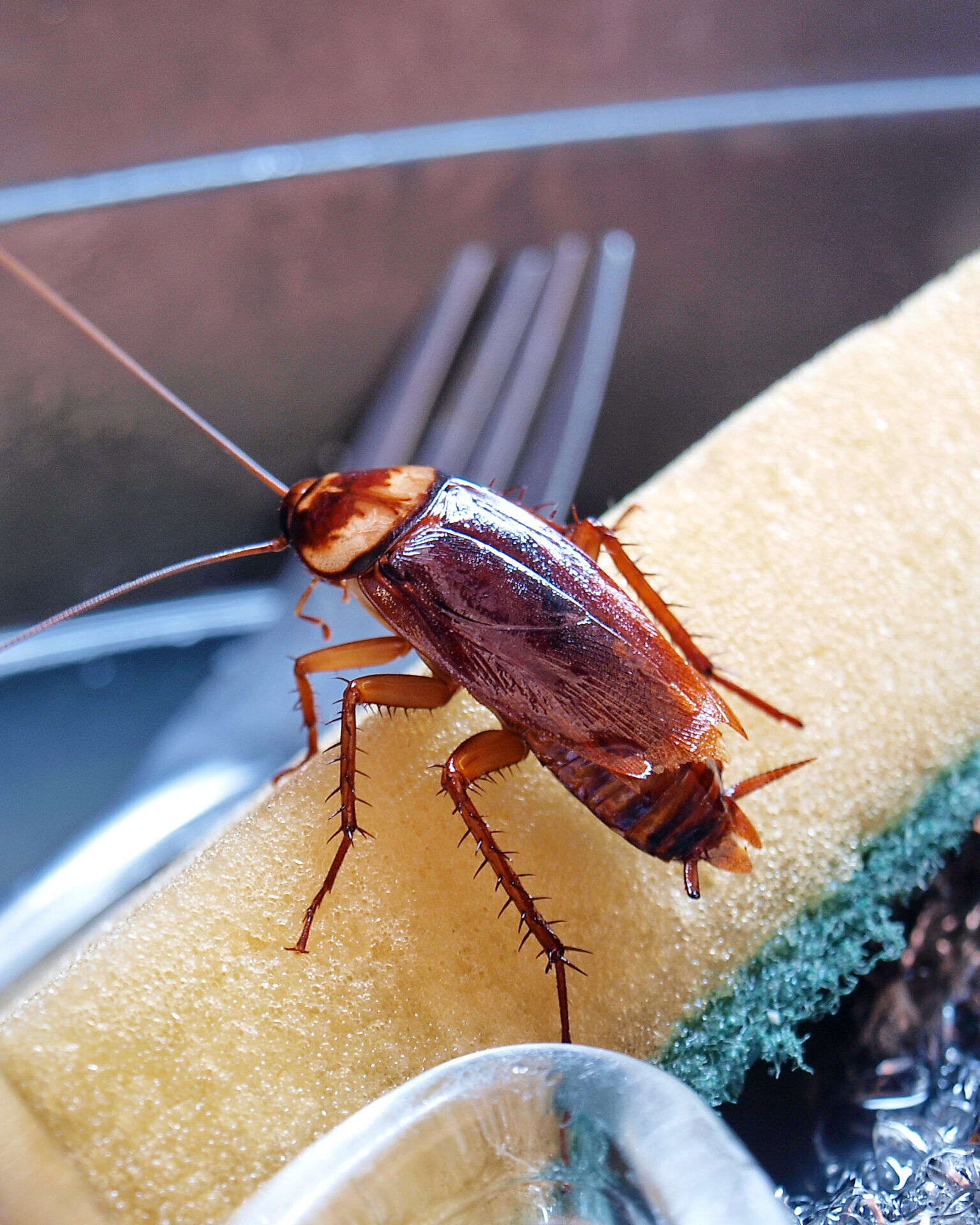
- American cockroach. Up to two inches and reddish brown, often called a waterbug. It favors drains, sewers, boiler rooms, and commercial basements, so treatment shifts toward drain lines, moisture sources, and the ground-level gaps it entered through.
- Oriental cockroach. Shiny black and just over an inch, another moisture lover found in crawl spaces, floor drains, and damp basements. Exterior harborage and entry sealing matter as much as interior product.
Misidentifying the species wastes weeks. A German infestation treated like an occasional American invader will be worse in a month, which is exactly why the inspection comes before any product.
Step by Step: How the Roach Program Runs
- Free inspection. A licensed technician confirms the species, maps harborage with flashlight-and-mirror work in the kitchen and baths, and notes sanitation or moisture conditions feeding the problem.
- First treatment. Gel bait, IGR placement, monitors, and any needed vacuuming happen the same visit; zero-contact service is available on request.
- Monitoring window. Glue boards left in place show whether activity is collapsing or holding in specific zones.
- Follow-up. Where monitors or sightings say the population survived, the return visit re-baits with a rotated product so bait aversion never takes hold.
- Prevention. Entry-point sealing and written sanitation recommendations keep the next roach from finding what the last one did.
Roach Exterminator Cost in Maryland
Published figures from Pest Czar’s own Maryland roach cost guide frame the budget conversation before anyone visits your home:
| Scenario | Typical Range |
|---|---|
| Standard one-time treatment | $150 to $400 |
| Severe or persistent infestation | $400 to $600+ |
| Recurring plan coverage | $40 to $70 per month |
| Quarterly service visits | $90 to $150 per visit |
Four things move a roach quote: the species (German infestations demand repeated, aggressive treatment), how far the population has spread, home size, and access (cluttered storage, tight crawl spaces, and sealed wall voids all add labor).
Czar Guard plans starting at $39 per month fold cockroach coverage into year-round protection, which is usually the cheaper path for anyone who has battled roaches more than once.
How Long Until the Roaches Are Gone?
Expect a sharp drop in sightings within roughly two weeks of the first baiting. Severe German infestations, especially in multifamily buildings, can take multiple visits across four to six weeks because egg cases keep hatching after adults die. Seeing a few roaches in the days after treatment is normal and can even be a good sign: bait draws them out of harborage before it kills them. What matters is the trend on the monitors, not any single sighting.
Before the Technician Arrives
- Clear the area under the kitchen sink and pull small items away from suspected hot spots so cracks are reachable.
- Wash dishes and put away exposed food the night before; bait competes with crumbs, and it wins faster in a clean kitchen.
- Skip the DIY sprays in the meantime. Repellent over-the-counter products scatter roaches into new rooms and can make bait placements fail.
- Note where and when you see activity, day sightings especially, since daytime roaches signal heavy pressure.
After Treatment: Fewer Sightings, Then None
Dead and dying roaches appear for one to two weeks as bait circulates through the population. Leave monitors and bait placements undisturbed, keep counters dry overnight, and take the trash out nightly while the program works. If live activity continues past the expected window, the 30-day warranty covers re-service on one-time jobs at no charge, and Czar Guard members can request a return visit any time a covered pest shows up between quarterly services.
Why Roach Problems Persist in Baltimore Buildings
Rowhome blocks and older apartment buildings give cockroaches a structural advantage: shared party walls, continuous utility chases, and aging drain lines let a population in one unit seed its neighbors, so a single-unit treatment in a connected building often only shuffles the roaches around. Effective work in these properties treats the shared voids and coordinates with landlords where possible.
There is also a health reason not to wait. Roach droppings, shed skins, and saliva are potent indoor allergens, and research compiled by the National Institute of Environmental Health Sciences links cockroach allergen exposure to asthma symptoms, particularly in children in urban housing. Restaurants and commercial kitchens carry a separate risk: a visible roach during a health inspection can cost far more than a year of professional service, which is why food-service clients pair treatment with documented monitoring under Pest Czar’s Food Processing and Public Health certifications.
Proof Before Promises
- QualityPro and GreenPro accredited, credentials held by a small fraction of U.S. pest control firms, with NPMA membership
- State pesticide business license through the Maryland Department of Agriculture; a certified applicator handles every roach job
- A+ Better Business Bureau rating; woman-owned and WMBE certified under owner Erika Milenkovic
- Operating from 1016 Cromwell Bridge Rd in Towson since 2013, minutes from the Baltimore neighborhoods where roach pressure runs highest
- Real-time digital service notifications, and zero-contact visits on request
We just had our first follow up service from our initial purchase of service. Pest Czar Was prompt with their follow up and thorough in their visit. Would highly recommend.
-Katrina M, Google Reviews
Where Roach Service Is Available
Technicians dispatch from the Towson headquarters to Baltimore City rowhomes and apartments, throughout Baltimore County, and across the metro counties listed on the Areas We Serve page. City neighborhoods with dense multifamily housing generate the most German roach calls; drain-loving American and Oriental roaches turn up everywhere older plumbing runs.
FAQs
How much does a roach exterminator cost in Baltimore?
Most one-time treatments land between $150 and $400, with severe German cockroach infestations running $400 to $600 or more. Recurring coverage runs $40 to $70 monthly. The free inspection produces an exact written quote before any work begins.
Can I get rid of German cockroaches myself?
Rarely, once they are established. Store-bought sprays repel roaches deeper into walls, and any surviving female carries an egg case with dozens of nymphs. Professional gel bait paired with an IGR breaks the breeding cycle, which is the part DIY treatments miss.
Why am I seeing more roaches right after treatment?
Bait pulls roaches out of hiding before it kills them, so a brief rise in sightings during the first days is expected. Activity should fall off sharply within two weeks; if it does not, re-service is covered.
Do I need to empty every cabinet before the visit?
No. Baiting programs need only clear access under the sink and around hot spots. Full cabinet emptying was a requirement of old broadcast-spray treatments, not modern crack-and-crevice work.
Are the treatments safe around kids and pets?
Products go into cracks, crevices, and tamper-resistant placements rather than onto open surfaces, following IPM practice and label directions. Tell the technician about pets and children at the inspection so placements are planned accordingly, and keep everyone off treated areas until products dry.
My rowhome neighbor has roaches. Will treating my unit even work?
It helps immediately, but shared walls and utility chases mean lasting control in connected housing works best when adjoining units or the whole building are addressed. The technician can document findings for a landlord or association to make that case.
Do roaches mean my house is dirty?
No. German roaches arrive in grocery bags, deliveries, and secondhand appliances; American and Oriental roaches walk in through drains and foundation gaps. Sanitation affects how fast they multiply, not whether they arrive.
Is one treatment enough?
Light, caught-early problems sometimes resolve in a single baited visit backed by the 30-day warranty. German infestations that have had months to build usually need follow-up as egg cases hatch, which is why monitoring is built into the program.
Get the Roaches Out for Good
Every day an infestation waits, another egg case hatches. Call (443) 377-3365 or book online for a free inspection, often available same-day, and get a written plan with exact pricing before treatment starts.
- Zero-Contact Service
- Same-Day Inspection/Service
- Real-Time Notifications

Customer Reviews
“As with all your technicians, Joe was courteous, respectful and thorough. He refilled all of the traps and explained the pest traffic we were receiving. Great services as usual! Thank you!!!”
Shundra | Randallstown, MD | Read Reviews