

Healthcare facilities in Baltimore operate in environments where infection control is critical for patient and employee safety.
Hospitals, clinics, and care centers operate around the clock and contain food service areas, laundry systems, plumbing networks, and medical waste zones that create heat and moisture. These same resources provide pests with what they need to survive.
In addition to health concerns, pest activity violates regulatory requirements and poses a significant liability for healthcare providers.
Rodents, cockroaches, flies, and bed bugs are the most common invaders. Their presence increases contamination risk, spreads allergens and bacteria, and undermines sanitation standards. In healthcare settings, commercial pest control is a required safety system, not a routine maintenance task.
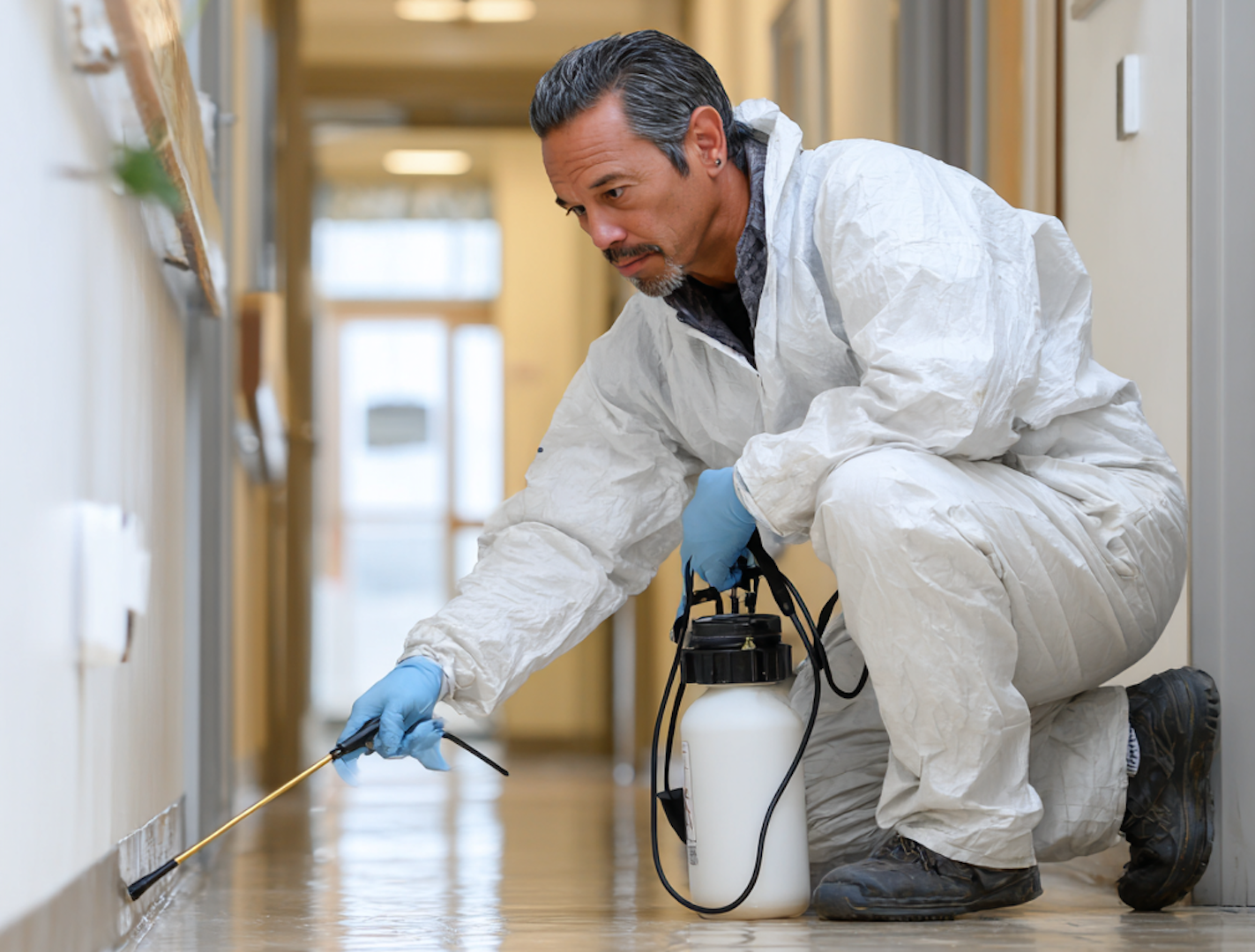
Why Pest Control Is Critical in Healthcare Settings
Healthcare environments serve vulnerable populations, including patients with compromised immune systems. Pests introduce bacteria, allergens, and pathogens that can directly impact patient outcomes and staff safety.
Pests, like rodents and cockroaches, are likely to contaminate surfaces and food stores, spread bacteria and allergens, and generally reduce the hygiene of any facility.
Unlike other business spaces, healthcare facilities operate around the clock. This constant activity creates more opportunities for pest infestation, making effective pest control services a core part of facility operations.
Common Pests Found in Medical and Healthcare Buildings
While healthcare facilities are known for being sanitary, they are still at risk for several urban pests in Baltimore, including:
Bed Bugs
Bed bugs are not known to transmit disease, but bites cause skin irritation, sleep disruption, and psychological stress for patients already in recovery. In healthcare settings, where many patients have weakened immune systems, even low levels of contamination or allergen exposure can lead to complications, slower healing, and higher infection-control risks.
Rodents
Mice and rats often make their way in through tiny cracks and openings, often nesting in utility areas. Rodents spread diseases such as Salmonella and contaminate surfaces, storage areas, and equipment with droppings and urine.
Cockroaches
Cockroaches carry pathogens on their bodies and contribute to airborne allergens that can trigger asthma attacks and respiratory issues in sensitive patients.
They thrive in warm, humid environments, primarily targeting kitchens and food stores inside hospitals.
Flies
Flies transfer microorganisms from waste and drains to food preparation and treatment areas, increasing cross-contamination risk.
They primarily live in kitchens, food storage areas, and drains.
Regulatory Compliance and Inspection Requirements
Healthcare facilities in Maryland are legally required to maintain environments free of pests through documented pest control programs.
Under the Maryland Code of Regulations (COMAR), medical and long-term care facilities must operate active pest-control measures that keep buildings free of insects, rodents, and other vermin as part of routine housekeeping and safety standards.
Facilities are also required to maintain clean, easily sanitized surfaces and structural conditions that support ongoing pest prevention.
Failing to meet these regulatory standards can result in health department citations, fines, and increased scrutiny during routine inspections.
Baltimore and Maryland health inspectors check for signs of pests, proper sanitation, appropriate exclusion measures (such as screen integrity and sealed openings), and documented pest monitoring. These inspections are part of broader safety and infection-control oversight designed to protect patients, staff, and visitors.
Routine documentation, including pest monitoring logs, corrective action records, and treatment reports, helps demonstrate compliance with state regulations and supports accreditation and licensure requirements.
Integrated Pest Management (IPM) for Healthcare Environments
Integrated Pest Management, or IPM, is the standard for pest control in healthcare facilities and other service businesses in the Baltimore area. It’s a practice that accepts that pest control is an ongoing issue, focusing on prevention, monitoring, and targeted control as opposed to relying solely on harsh chemical treatments.
IPM approaches work from the least aggressive forms of treatment to the most, using methods designed for healthcare facilities. This reduces the risks posed to patients while actively fighting pest-related threats.
Preventing Pest Entry and Infestations
Pests enter healthcare facilities through structural gaps, utility penetrations, drains, and loading areas. Because hospitals and care centers operate continuously, even small openings can allow repeated pest movement. Sealing these vulnerabilities is essential for long-term prevention.
Key prevention steps include:
- Seal cracks and structural gaps around foundations, walls, doors, windows, and utility lines to eliminate common entry routes.
- Install and maintain door sweeps and weather stripping to prevent rodents and insects from entering at ground level.
- Maintain drain covers and floor drain sanitation since drains provide moisture and access for flies and cockroaches.
- Manage waste and laundry areas carefully, as these zones create moisture and odor that attract pests.
- Reduce exterior harborage by keeping vegetation, debris, and stored materials away from the building perimeter.
- Monitor high-risk areas such as kitchens, mechanical rooms, and storage zones for early signs of activity.
Working with a healthcare-experienced pest control provider helps identify hidden vulnerabilities and ensures exclusion, monitoring, and prevention measures are applied consistently.
Choosing a Qualified Healthcare Pest Control Provider
Careful attention must be paid when selecting a pest control provider for any healthcare facility. Not all professionals have the proper expertise to complete the job.
Search for a pest control provider with proper certifications, including GreenPro and QualityPro certification, as well as Public Health Certification.
Maintaining a long-term relationship with your provider is essential to achieving the best possible results.
FAQs
What pests are most common in Baltimore hospitals and clinics?
Rodents, cockroaches, flies, and bed bugs are among the most common pests found in Baltimore healthcare environments.
Can pests contribute to the spread of infections?
Yes. Pests can spread bacteria and pathogens that increase the risk of infection.
How often should healthcare facilities schedule pest control services?
Most healthcare facilities require monthly visits, with higher-risk environments needing more frequent monitoring.
Are pest control treatments safe for patients and medical staff?
IPM methods ensure the least disruptive methods are used, which are generally safe for healthcare facilities.
What areas of healthcare buildings are most vulnerable to pests?
Pests primarily target patient areas, waste zones, kitchens, utility areas, and food stores.
How does pest control affect health inspections and compliance?
Solid pest control plans actively prevent and control pest risks, which reduces the likelihood of violations.
What is Integrated Pest Management in healthcare settings?
IPM is an approach that combines monitoring and prevention techniques that are safe and mostly non-disruptive for healthcare facilities.
Can pest control be performed without disrupting patient care?
In many cases, professional control methods can be used to curb pest problems without disrupting healthcare services.
What documentation is required for healthcare pest control programs?
Treatment records, inspection logs, corrective action documentation, and monitoring reports are typically required.