

Baltimore’s City Department of Public Works completed more than 109,985 rat removal visits in 2024, as part of the city’s free Rat Rubout Program, first introduced in 1981.
According to public data from the 311 call portal, Rat Rubout service requests increased by more than 10% in 2024 compared to 2023, making rodent activity the second most common complaint category citywide, trailing only litter.
Rat pressure in Baltimore is not evenly distributed, as phone data shows that rat service requests tend to cluster most heavily in lower-income neighborhoods.
District 13, which includes the neighborhoods of McElderry Park and Middle East in East Baltimore, received 17,439 Rat Rubout visits as of late 2024, more than any other council district in the city. By contrast, Sandtown-Winchester in West Baltimore generated only 298 resident-requested Rat Rubout calls in all of 2023.
However, this discrepancy was not necessarily because the rats are absent, but because residents there are among the least likely to call 311 for a service they do not trust will reach them.
The city continues to search for ways to address its rat problem, even piloting an experimental rat contraceptive program in early 2025. Despite the city’s best efforts, many council members acknowledge that they are not enough to curb citywide rat problems.
For individuals who use the free 311 service, response times can be up to 15 days for an initial inspection, leading many residents to turn to other options, such as local pest control.
This article maps Baltimore’s rat complaint landscape using publicly available 311 data, the city’s Rat Rubout service records, and neighborhood-level analysis.
It covers which areas of the city consistently generate the most rodent activity reports, what structural and environmental factors drive rat pressure in those zones, and what residents in high-activity neighborhoods can do when the city’s response falls short.
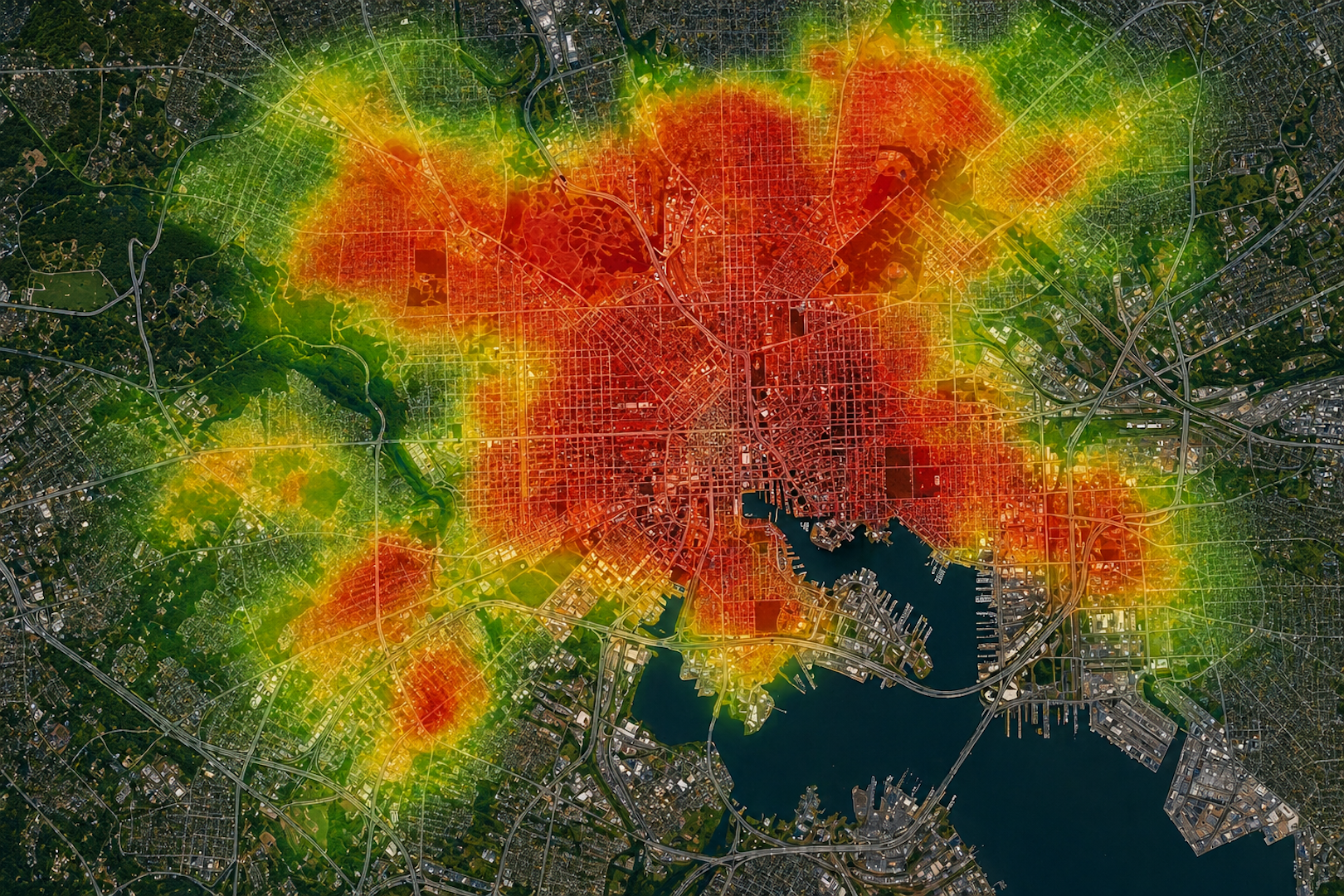
How We Mapped Baltimore Rat Complaints
The primary data sources for this analysis are Baltimore City’s 311 Customer Service Request records, available through the Open Baltimore data portal at data.baltimorecity.gov, and the city’s Rat Rubout visit records.
The 311 dataset tracks resident-submitted service requests by type, date, and neighborhood. For rodent activity, two request types are relevant: resident-initiated Rat Rubout requests and proactive Rat Rubout visits logged by DPW field crews on their own inspection rounds.
Both types appear in the 311 dataset. The 2024 total of 109,985 visits includes both resident-requested and proactive inspections. The city significantly increased proactive visits in 2024, adding nearly 15,000 more proactive rubouts than in 2023, which helped drive the overall number higher.
Two data limitations are important to note. First, 311 complaint volume is a proxy for reported rodent activity, not total rodent population.
Neighborhoods with lower call volume do not necessarily have fewer rats. Sandtown-Winchester, for example, has documented rat pressure but generates a fraction of the 311 calls that Belair-Edison does, partly because of lower resident engagement with city services in economically disinvested communities.
Second, the city’s data is organized by council district and neighborhood, but district-level aggregation (as used in the Rat Rubout visit counts) covers multiple neighborhoods and should not be interpreted as a single-neighborhood figure.
Which Baltimore Neighborhoods and Districts Have the Most Rat Activity?
The following breakdown uses Rat Rubout visit data by council district as reported by Baltimore Magazine (late 2024) and 311 aggregate neighborhood data as analyzed by the Baltimore Sun (February 2025). District-level figures cover the geographic footprint of each city council district.
| Council District | Key Neighborhoods | Rat Rubout Visits (2024) | Notes |
| District 13 | McElderry Park, Middle East, Broadway East | 17,439 | Highest in city; dense rowhouse stock, concentrated food waste |
| District 7 | Sandtown-Winchester, Upton, Harlem Park | 7,555 | Severely underreported; 298 resident calls in 2023 despite persistent activity |
| District 2 (partial) | Belair-Edison, Highlandtown | High — citywide #1 neighborhood | Belair-Edison led all Baltimore neighborhoods for total 311 requests in 2024 |
| District 10 (partial) | Brooklyn, Cherry Hill | High — 4th busiest overall | Port-adjacent; alley rat pressure, elevated food waste from industrial corridor |
| District 3 (partial) | Morrell Park, Violetville | Moderate-High | City data historically flagged as high-concentration zone |
Belair-Edison in Northeast Baltimore generated over 29,000 total 311 requests in 2024, the most of any neighborhood in the city, with rat activity cited by the DPW as a primary driver. Councilwoman Danielle McCray, who represents District 2 neighborhoods including Belair-Edison and Highlandtown, stated at a city hearing that current interventions are “not enough.”
The neighborhood’s Rat Rubout team presence is among the most concentrated in the city.
Why Do Some Baltimore Neighborhoods Have Higher Rat Activity?
Rat pressure in Baltimore follows predictable structural and geographic patterns. The neighborhoods with the highest complaint and intervention rates share specific characteristics that create ideal rodent habitat and that are difficult to address through baiting alone.
Rowhouse Density and Alley Infrastructure
Baltimore’s historic rowhouse neighborhoods were built around a shared alley system that runs behind most residential blocks. Alleys are the primary travel corridor for Norway rats (Rattus norvegicus), the dominant species in Baltimore, which are burrowing ground rats that prefer to move along protected linear pathways.
Alley-facing trash areas, shared dumpsters, and irregular trash pickup schedules create a concentrated food source that sustains large rat populations in the alleys behind blocks in Belair-Edison, Broadway East, and Sandtown-Winchester.
Vacant Properties and Lot Conditions
Baltimore has one of the highest rates of vacant properties of any major U.S. city. Vacant structures and overgrown lots provide undisturbed burrowing habitat directly adjacent to occupied residential properties.
Rats establish burrows in the soil beneath vacant foundations and under overgrown vegetation on abandoned lots, then forage into neighboring occupied homes. District 13 and District 7, both of which rank high for rat activity, also contain some of the city’s highest concentrations of vacant properties.
Proximity to the Port and Food Infrastructure
Baltimore’s Inner Harbor and the industrial and commercial port corridor create persistent rat pressure in South Baltimore neighborhoods like Brooklyn and Cherry Hill. Commercial food distribution, restaurant waste, and waterfront infrastructure all contribute to elevated rodent populations in the areas surrounding the port.
Historic port cities globally show higher rat densities near their waterfronts, and Baltimore is consistent with that pattern.
Sewer and Stormwater Infrastructure Age
Baltimore’s sewer system includes pipes that date to the 19th century in older neighborhoods. Aging sewer infrastructure provides rats with underground travel routes between properties and neighborhoods, and cracked or collapsed sewer laterals allow rats to move from the sewer system into residential structures directly.
The city’s oldest neighborhoods, concentrated in East and West Baltimore, tend to have both the oldest infrastructure and the highest rat activity rates.
How Does Baltimore’s Rat Problem Compare to Other U.S. Cities?
Baltimore ranked No. 12 on Orkin’s 2025 Rattiest Cities list, falling out of the top 10 for the first time in a decade. This is a slight decline from its No. 7 ranking in 2022 and 2023, and from No. 6 in 2021.
Baltimore’s pilot contraceptive program, the Rat Rubout expansion, and the help of local exterminators have made a dent in the city’s rat population, though numbers remain high.
In 2024, the Rat Rubout team completed nearly 15,000 more proactive visits than in 2023, bringing the total to over 109,985 for the year. The city has shifted away from a purely reactive (complaint-driven) model toward systematic proactive inspections that rotate through all 14 council districts on a monthly schedule.
In recent years, the city has also pursued complementary approaches. In 2016, Baltimore spent $9 million on composite-resin trash cans for single-family homes, replacing bags with durable lidded containers designed to reduce accessible food waste.
Despite these efforts, city officials and council members have acknowledged that current interventions are insufficient. At a September 2024 city hearing on the rat problem, multiple officials cited unreliable trash pickup, persistent illegal dumping (estimated at 10,000 tons annually above the 200,000 tons of normal municipal waste), and inadequate staffing as reasons that rat populations remain difficult to control at the neighborhood level.
How Does Baltimore’s Rat Problem Compare to Other U.S. Cities?
Baltimore ranked No. 12 on Orkin’s 2025 Rattiest Cities list, falling out of the top 10 for the first time in a decade. This is a slight decline from its No. 7 ranking in 2022 and 2023, and from No. 6 in 2021.
Baltimore’s pilot contraceptive program, the Rat Rubout expansion, and the help of local exterminators have made a dent in the city’s rat population, though numbers remain high.
In 2024, the Rat Rubout team completed nearly 15,000 more proactive visits than in 2023, bringing the total to over 109,985 for the year. The city has shifted away from a purely reactive (complaint-driven) model toward systematic proactive inspections that rotate through all 14 council districts on a monthly schedule.
In recent years, the city has also pursued complementary approaches. In 2016, Baltimore spent $9 million on composite-resin trash cans for single-family homes, replacing bags with durable lidded containers designed to reduce accessible food waste.
Despite these efforts, city officials and council members have acknowledged that current interventions are insufficient. At a September 2024 city hearing on the rat problem, multiple officials cited unreliable trash pickup, persistent illegal dumping (estimated at 10,000 tons annually above the 200,000 tons of normal municipal waste), and inadequate staffing as reasons that rat populations remain difficult to control at the neighborhood level.
What Can Baltimore Residents in Rat-Heavy Neighborhoods Do?
City Rat Rubout service is free and available to all Baltimore residents. However, the average 311 response time for a rodent inspection is 15 days or less. For residents in neighborhoods with a long city response backlog or where repeat baiting has not resolved the problem, professional pest control offers a faster, more comprehensive response.
- File a 311 complaint for any active burrow on your property or adjacent property at 311.baltimorecity.gov or by calling 311. Provide the specific address of the affected property, not your own. Include photos if possible.
- Use a trash can with a tight-fitting lid at all times. Baltimore City provides one composite-resin trash can to each single-family household. Bagged trash left outside is the single most effective way to sustain a rat population on a residential block.
- Remove all pet food and animal waste from your yard daily. Rat feces contain vitamin K, which counteracts the blood-thinning effect of many rodenticides. Eliminating food sources makes baiting significantly more effective.
- Clear harborage from your property. Old vehicles, stored lumber, overgrown vegetation within three feet of your foundation, and debris piles all provide the cover rats need to establish burrows adjacent to occupied structures.
- Call a licensed exterminator when the DPW response is inadequate or the infestation extends inside the structure. City Rat Rubout treats burrows on property exteriors but does not perform structural exclusion inside homes. Interior rat activity, evidence of nesting in attic or wall void spaces, or rodent activity that persists after multiple city treatments requires a professional exclusion assessment.
Frequently Asked Questions About Rats in Baltimore
Where are rats most common in Baltimore?
Based on DPW Rat Rubout visit data, rat activity is highest in District 13, which includes McElderry Park, Middle East, and Broadway East in East Baltimore, with 17,439 Rat Rubout visits recorded in 2024.
Belair-Edison in Northeast Baltimore leads all city neighborhoods for total 311 requests, with rat activity cited as a primary driver. Brooklyn in South Baltimore and Sandtown-Winchester in West Baltimore also have documented chronic rat pressure, though Sandtown significantly underreports due to low 311 engagement.
Why does Baltimore have so many rats?
Rat pressure in Baltimore reflects a combination of structural factors that are difficult to address quickly. The city’s rowhouse neighborhoods were built around shared alley systems that serve as rat travel corridors.
Baltimore has among the highest vacant property rates of any major U.S. city, and vacant structures and lots provide undisturbed burrowing habitat. Aging sewer infrastructure dating to the 19th century in older neighborhoods provides underground access.
And the volume of accessible food waste, from both residential trash and the city’s commercial and port corridor, provides the food source that sustains large populations.
How do I report a rat problem in Baltimore?
Call 311 or submit a service request online at 311.baltimorecity.gov. For rat issues, select Housing, Buildings, and Structures, then Housing Inspection – Rodents. The DPW response target is 15 days or less.
You will need to complete a right-of-entry form before DPW workers can treat private property. For faster response or for infestations inside the structure, contact a licensed pest control company.
Is the city’s Rat Rubout program effective?
Rat Rubout addresses the immediate burrow population at treated properties and is free to all residents. In 2024, DPW completed over 109,985 visits, a significant increase from prior years.
However, city officials have publicly acknowledged that current programs are insufficient to reduce the rat population citywide. Baiting treats active burrows but does not address the structural entry points, food sources, and harborage conditions that allow rat populations to re-establish after treatment.
For sustained control, structural exclusion and consistent food waste management are required in addition to baiting.
What is Baltimore doing differently to address the rat problem?
The most significant recent shift is the city’s move toward proactive inspection rather than a purely reactive response to 311 complaints. In 2024, DPW added nearly 15,000 proactive Rat Rubout visits compared to 2023.
The city also ordered its first batch of ContraPest rat contraceptives in late 2024 to pilot a fertility-limiting treatment approach, and has invested in durable lidded trash cans for single-family homes to reduce accessible food waste.
Can rats get inside my Baltimore rowhouse?
Yes. Norway rats enter structures through gaps as small as half an inch. Common entry points in Baltimore rowhouses include gaps around plumbing and utility penetrations through the foundation or slab, deteriorated basement window frames, cracks in mortar between foundation blocks, and damaged or missing sewer clean-out caps.
Active rat activity inside the home, including gnaw marks, droppings, or sounds in walls or ceilings, is not addressed by the city’s Rat Rubout program, which treats exterior burrows only. Interior infestations require professional exclusion work.
Do rats in Baltimore carry diseases?
Yes. Norway rats are documented carriers of several pathogens relevant to human health. Leptospirosis, transmitted through contact with rat urine in contaminated water or soil, is the primary bacterial disease concern.
Salmonellosis can be transmitted through rat-contaminated food preparation surfaces or food storage. Rat-bite fever can result from bites or scratches. Hantavirus is associated with deer mice (a different species) rather than Norway rats, but Norway rat droppings and urine can still cause respiratory and gastrointestinal illness when disturbed in enclosed spaces without proper protection.
How long does it take for Baltimore’s 311 Rat Rubout service to respond?
The city’s target response time for rodent inspection requests is 15 days or less. In practice, response times vary by neighborhood and by the current volume of requests. Belair-Edison and other high-activity neighborhoods may experience longer queues during peak seasons (spring and fall, when rat activity increases as populations move between seasons).
If your 311 request is closed without a satisfactory resolution, you can resubmit the same request after 10 days.
Contact Pest Czar for Rodent Control in Baltimore