

Occasional invaders are pests that live and breed outdoors but move into Maryland homes when conditions outside turn against them: cold, heat, drought, or heavy rain. Most show up in late summer and fall, when shorter days push insects such as stink bugs, boxelder bugs, and Asian lady beetles to hunt for winter shelter, while moisture lovers like centipedes and silverfish drift toward damp basements year-round.
The good news is that nearly all of them are nuisance pests, not threats. This field guide covers the eight you are most likely to meet in Maryland, how to tell them apart, why they get in, and which ones actually justify a call to a pest professional.
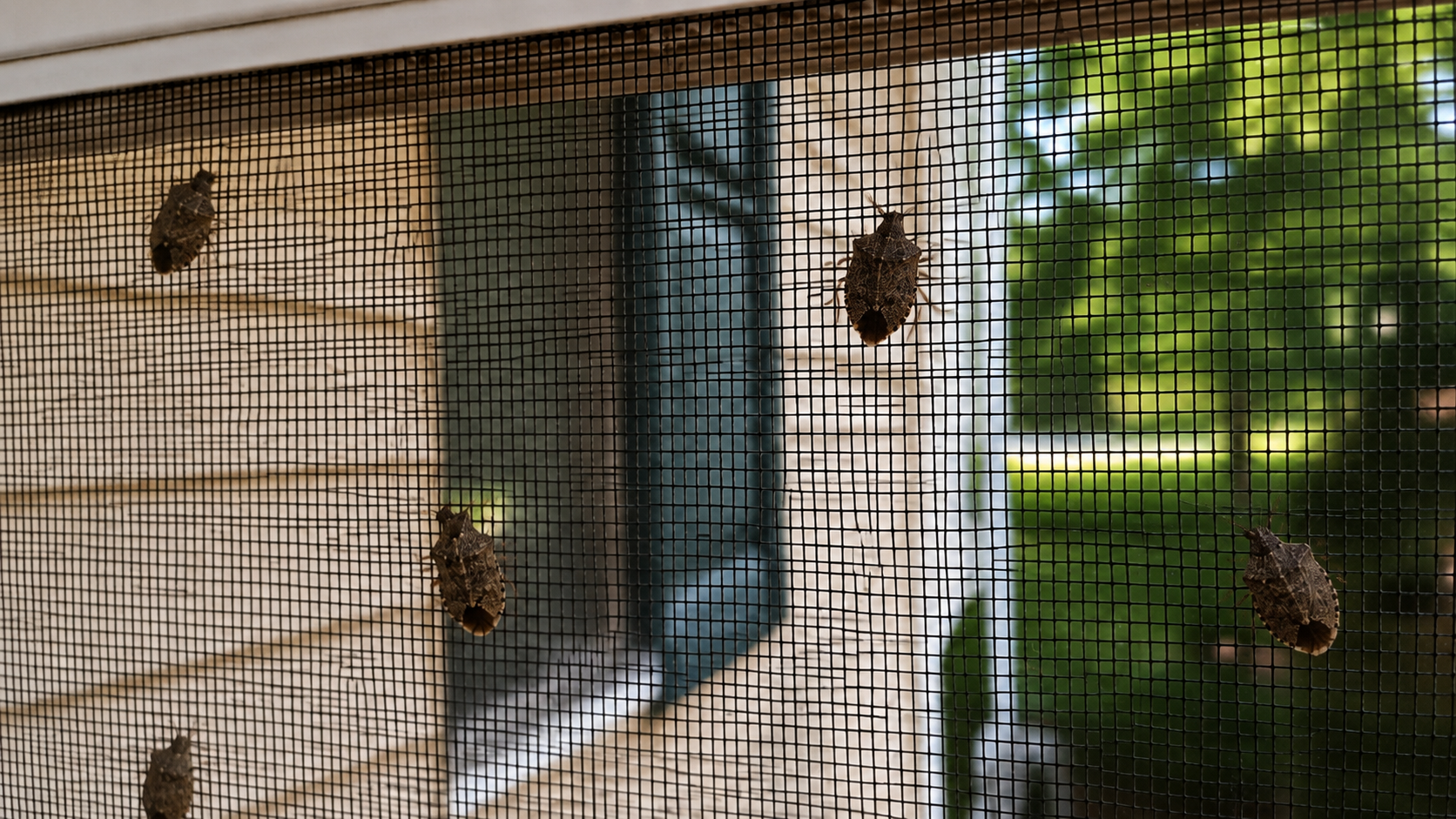
Maryland Occasional Invader Field Guide
| Pest | How to identify | When they invade | Harmful? | How they get in |
|---|---|---|---|---|
| Brown marmorated stink bug | Shield shape, marbled brown, light bands on antennae | Late summer and fall | No; odor when crushed | Gaps at siding, window and door trim, attic vents |
| Boxelder bug | Black with red-orange markings, about half an inch | Fall, on sunny walls | No; can stain fabrics | Cracks on sun-warmed south and west walls |
| Asian lady beetle | Orange to red, variable spots, dark M mark behind head | Fall through winter | No; odor and yellow stain | Gaps at eaves, window frames, siding |
| House centipede | Long flat body, many long legs, very fast | Year-round, damp areas | Rarely; can pinch if handled | Floor drains, foundation cracks, damp basements |
| Silverfish | Teardrop body, silvery scales, three tail bristles | Year-round, humid rooms | No; can damage paper and fabric | Gaps near plumbing, damp storage areas |
| Earwig | Slender brown body with rear pincers | Hot, dry, or rainy spells | No; pincers can pinch | Door thresholds, gaps near damp mulch |
| Cluster fly | Sluggish dark fly, slightly larger than a house fly | Fall; seen on warm winter days | No | Wall voids and attics via roofline gaps |
| Ground beetle | Dark, hard-shelled, fast crawler | Summer and fall nights | No | Under doors, drawn by exterior lights |
Here is a closer look at each one.
Brown Marmorated Stink Bug
Maryland’s signature fall invader. The University of Maryland Extension notes this Asian species was first observed in the United States in Allentown, Pennsylvania, then established in Washington County and spread across Maryland. Adults mass on sunny walls in late summer and early fall, slip into wall voids to overwinter, and wander out near baseboards, window trim, and ceiling fixtures on warm days. They do not bite, sting, breed indoors, or damage the structure. Their one weapon is the smell released when crushed, so a vacuum beats a shoe.
Boxelder Bug
Black with red-orange markings, boxelder bugs feed on maple and boxelder seeds all summer, then gather in dense masses on warm south- and west-facing walls in fall. Indoors they are harmless, though crushing them can stain light fabrics and walls. Like stink bugs, they do not reproduce inside.
Multicolored Asian Lady Beetle
These look like slightly larger, more orange ladybugs, often with a dark M-shaped mark behind the head. They are beneficial aphid predators outdoors, but they overwinter in buildings, sometimes by the hundreds. When disturbed they release an odor and a yellowish fluid that stains, and clusters tend to reappear at windows through winter.
House Centipede
Alarming to see and quick on their many legs, house centipedes are actually predators that eat other insects and spiders. A steady centipede population is really a sign of two things: moisture and a food supply of other pests. They can pinch if handled, but they avoid people.
Silverfish
Silverfish are teardrop-shaped, scale-covered insects that thrive in humid basements, bathrooms, and storage areas. Unlike the fall crowd, they can live and reproduce indoors wherever humidity stays high, and they feed on starches: paper, book bindings, wallpaper paste, and fabric. Persistent silverfish are a humidity problem wearing an insect costume.
Earwig
Recognizable by the pincers on their tail end, earwigs live in damp mulch, leaf litter, and garden beds. They wander indoors when outdoor conditions swing too hot, too dry, or too wet. The pincers can deliver a mild pinch but are not dangerous, and earwigs do not establish indoor colonies.
Cluster Fly
Cluster flies are the sluggish flies that appear at windows on warm winter days. They enter wall voids and attics through roofline gaps in fall to overwinter. They do not breed indoors and are not a sanitation problem, which separates them from house flies. Their larvae develop in soil outdoors.
Ground Beetle
Dark, hard-shelled, and fast, ground beetles hunt other insects at night and often end up indoors by accident, drawn to exterior lights and slipping under doors. They are harmless wanderers. Swapping bright white exterior bulbs for warmer, yellow-toned ones reduces how many show up at your doorstep.
Why Do These Pests Invade Maryland Homes?
Three forces drive nearly every occasional invader indoors, and knowing which one you are dealing with tells you the fix.
- Weather shifts and overwintering. Stink bugs, boxelder bugs, lady beetles, and cluster flies respond to shortening days by seeking protected winter shelter, and a heated wall void is the best shelter in the neighborhood. This group arrives in a narrow fall window, which is why sealing in September pays off all winter.
- Moisture. Centipedes, silverfish, and earwigs follow dampness. Humid basements, leaky pipes, wet mulch against the foundation, and clogged gutters create the conditions they need. Dry the environment and this group thins out on its own.
- Light and accident. Ground beetles and other night wanderers are drawn to exterior lighting and stumble inside under doors. They are not seeking your home at all, which is why door sweeps and smarter bulbs solve most of it.
Maryland’s climate amplifies all three: humid Chesapeake summers feed the moisture group, and real winters force the overwintering group to commit to shelter every fall.
How Do You Keep Occasional Invaders Out?
Exclusion and moisture control handle almost everything, and the work overlaps completely with fall rodent-proofing.
- Seal exterior cracks with caulk, focusing on window and door trim, siding gaps, and utility penetrations.
- Add door sweeps and fresh weather stripping, including the garage entry door.
- Repair torn screens and re-seat loose ones; screen attic and crawl space vents.
- Fix leaks, improve drainage, and run a dehumidifier in damp basements and crawl spaces.
- Pull mulch and leaf litter back from the foundation so a dry border surrounds the house.
- Vacuum up the insects that get inside and empty the vacuum outdoors. Do not crush stink bugs, boxelder bugs, or lady beetles indoors, because odor and staining are their only real damage.
Skip the spray can. For overwintering invaders such as stink bugs, the University of Maryland Extension recommends against indoor insecticides, which kill few of the hidden insects and add needless exposure. Physical exclusion is the treatment. The step-by-step sealing routine is in our fall pest-proofing checklist, which covers the same gaps these insects use.
A Note on the Spotted Lanternfly
Marylanders often lump the spotted lanternfly in with fall invaders because it is conspicuous in late summer, but it behaves differently: it is an outdoor plant pest, not a home invader, and it does not overwinter inside houses the way stink bugs do. It is a serious agricultural concern, though. As of March 2026, the Maryland Department of Agriculture expanded its spotted lanternfly quarantine statewide, restricting the movement of plants, outdoor equipment, and other regulated articles that can carry egg masses.
For homeowners, the University of Maryland Extension advises that lanternflies rarely cause meaningful damage to healthy landscape plants and that spraying, including home remedies, can do more harm than good. Scrape and destroy egg masses you find on trees, outdoor furniture, and vehicles, and check items before transporting them.
Which Occasional Invaders Actually Need a Pro?
Most of the time, none of them: a caulk gun, a dehumidifier, and a vacuum are the honest first-line tools. Call a professional in three situations.
- The numbers are overwhelming every year. Hundreds of stink bugs or lady beetles each fall means your exterior has entry points you have not found. A technician can locate and close them before the next wave.
- The invaders signal a bigger problem. Constant centipedes and silverfish point to moisture and to the other insects they feed on. A large indoor spider population usually means a healthy prey supply too, which is worth diagnosing; our guide to why spiders show up in Maryland homes explains that chain.
- You want it handled and kept handled. A recurring plan treats the exterior before each seasonal wave and includes exclusion work, so the fall rush never reaches your living room.
Every Czar Guard plan covers common invaders with quarterly exterior service, includes pest and rodent exclusion for up to one linear foot, and carries the Pest Czar Guarantee: if pests return between visits, so do we, free. See the occasional invaders service for the full pest list, or contact us for a free inspection. Pest Czar is a woman-owned, QualityPro and GreenPro-certified exterminator based in Towson serving the Baltimore metro.
FAQs
What are occasional invaders?
Pests that live and reproduce outdoors but enter homes when outdoor conditions turn hostile: cold, heat, drought, or heavy rain. In Maryland the group includes stink bugs, boxelder bugs, Asian lady beetles, house centipedes, silverfish, earwigs, cluster flies, and ground beetles.
Why do I get stink bugs every fall?
Brown marmorated stink bugs seek protected overwintering shelter as days shorten, and they mass on sun-warmed walls before slipping into cracks and wall voids. If it happens every year, your exterior has entry points that need sealing, most often around window and door trim, siding gaps, and attic vents.
Are house centipedes dangerous?
No. They can pinch if handled, but they avoid people and actually hunt other insects and spiders. A persistent centipede population is a sign of moisture and a food supply of other pests, which are the two things worth fixing.
What attracts silverfish?
Humidity and starches. Silverfish thrive in damp basements, bathrooms, and storage areas, feeding on paper, book bindings, wallpaper paste, and fabric. Running a dehumidifier and storing paper goods in sealed bins removes what they came for.
Do occasional invaders breed inside the house?
The fall overwintering group, including stink bugs, boxelder bugs, lady beetles, and cluster flies, does not reproduce indoors; they shelter and leave in spring. Moisture pests are the exception: silverfish can live and breed indoors year-round wherever humidity stays high.
Should I squish stink bugs or lady beetles?
No. Stink bugs release a strong odor when crushed, and Asian lady beetles release an odor plus a yellowish fluid that stains walls and fabric. Vacuum them up instead and empty the vacuum into an outdoor trash can.
Why do these bugs reappear in my house in late winter?
Warmth wakes them. Insects overwintering in your wall voids become active when sunny days or your heating system warm their hiding spots, and some wander into living spaces instead of back outside. Seeing them in January or February means they overwintered inside, not that a new invasion is underway.
Do I need to spray pesticides for occasional invaders?
Usually not. The University of Maryland Extension advises against indoor insecticides for stink bugs, because sprays kill few of the hidden insects and add needless exposure. Exclusion, moisture control, and a vacuum handle most cases; a professional is worth it when the numbers are large every year.
Is the spotted lanternfly a house pest?
No. It is an outdoor plant pest that does not shelter in homes the way stink bugs do, though it can lay egg masses on outdoor furniture, vehicles, and firewood. Maryland’s quarantine went statewide in March 2026, so check and scrape egg masses before moving outdoor items.
When should I call a professional about occasional invaders?
When large numbers return every season, when centipedes or silverfish persist despite drying the space, or when you want the exterior sealed and treated on a schedule. A recurring plan with exclusion work stops the fall wave before it reaches the living space.