

The single most important fall pest move in Maryland is to seal and exclude before the weather turns. Once the first cold nights arrive, mice, stink bugs, lady beetles, and spiders start moving indoors, and it is far easier to keep them out in late August and September than to remove them in November.
Here is the short version of the checklist. Each item is explained in detail below.
- Seal exterior gaps, cracks, and utility penetrations
- Install or replace door sweeps and weather stripping
- Screen vents, weep holes, and the chimney
- Repair torn window and door screens
- Declutter the attic, basement, and garage, and switch to sealed bins
- Fix moisture problems and run a dehumidifier in damp areas
- Move firewood off the ground and away from the house
- Trim branches and shrubs off the siding and roofline
- Clean the gutters and rake leaf litter back from the foundation
- Line up professional exclusion before the fall rush
Which Pests Invade Maryland Homes in the Fall?
Two groups show up when temperatures drop. Rodents come in for warmth, food, and nesting space, and they stay active all winter. Overwintering insects, led by the brown marmorated stink bug, gather on sun-warmed walls in late summer and slip into voids to wait out the cold. The University of Maryland Extension notes that stink bug adults congregate in late summer and early fall and actively seek overwintering sites, especially inside buildings.
| Pest | Why it comes inside | What to expect |
|---|---|---|
| House mice and rats | Warmth, food, and nesting sites as nights cool | Droppings, gnaw marks, and night sounds; active all winter |
| Brown marmorated stink bugs | Overwintering shelter in wall voids and attics | Clusters on sunny walls in fall; stragglers indoors into spring; odor if crushed |
| Boxelder bugs | Overwintering shelter on sun-warmed south and west walls | Black and red masses on siding; harmless, but can stain if crushed |
| Asian lady beetles | Overwintering shelter | Clusters at ceilings and windows; odor and yellow staining when disturbed |
| Spiders | Following prey insects indoors; fall is mating season | More sightings in basements, garages, and room corners |
| Cluster flies | Overwintering in wall voids and attics | Sluggish flies at windows on warm winter days |
The overwintering insects are nuisance pests rather than threats. They do not bite, sting, spread disease, or damage the structure. Rodents are a different story, which is why the exclusion steps below focus on the small gaps mice use. For a full field guide to the insect group, see our companion post on common occasional invaders in Maryland homes.
Exterior Exclusion Checklist: Seal the Gaps
Exclusion works because the entry points are small and findable. The CDC’s rodent exclusion guidance notes a mouse can fit through a hole the width of a pencil, about a quarter inch. If a gap fits a pencil, it fits a mouse.
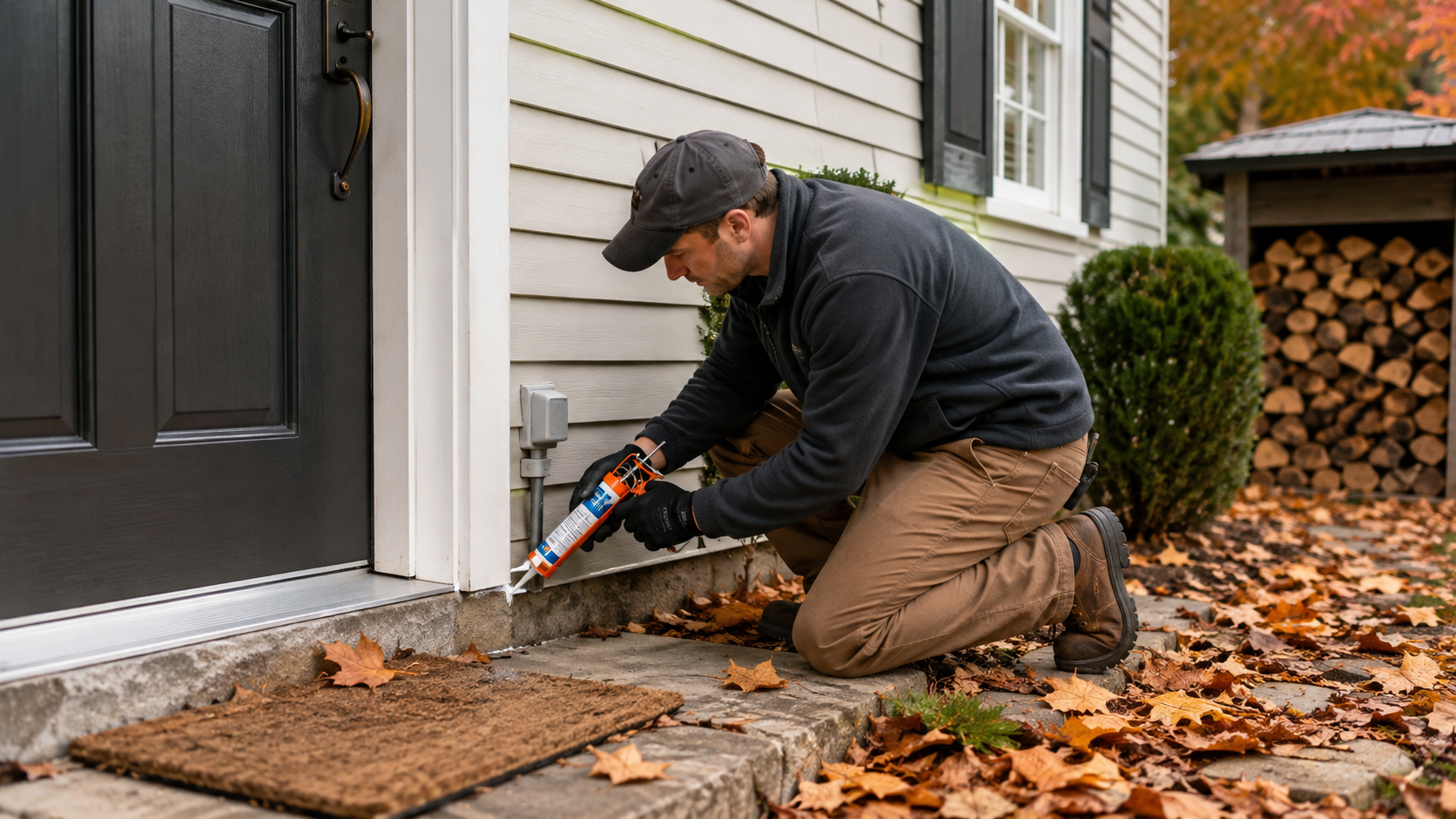
- Walk the foundation. Check where the foundation meets the siding and the ground, and seal cracks with an exterior-grade caulk. Pay attention to corners and the garage slab edge.
- Seal utility penetrations. Every pipe, cable, gas line, and AC line set that enters the house leaves a gap. Fill small holes with steel wool and caulk over it to hold it in place; use hardware cloth, metal sheeting, or cement for larger openings. Rodents gnaw through foam and caulk alone.
- Install door sweeps and weather stripping. Daylight under an exterior door is an open invitation. Fit sweeps on exterior doors, including the door from the garage into the house, and replace flattened weather stripping around doors and windows.
- Screen vents, weep holes, and the chimney. Cover attic and crawl space vents, brick weep holes, and the dryer vent with quarter-inch hardware cloth or purpose-made covers that still allow airflow, and cap the chimney.
- Repair window and door screens. Patch tears and re-seat screens that have pulled out of their frames. Stink bugs and lady beetles exploit the gap between a loose screen and the frame.
- Check the roofline. Gaps at eaves, soffits, gables, and fascia boards let pests reach the attic. Binoculars from the yard will reveal most problem spots.
Work in the order above. Ground-level gaps serve mice, and the sunny upper walls serve stink bugs, so both zones need attention before the first cold snap.
Interior Prep: Attic, Basement, and Garage
Sealing keeps pests out. Interior prep makes your home a poor host for anything that still gets in.
- Declutter storage areas. Cardboard boxes on the floor are nesting material and cover for mice and harborage for silverfish and spiders. Switch to lidded plastic bins on shelving, and keep a visible gap between stored items and the walls so you can spot droppings early.
- Control moisture. Fix dripping pipes and condensation, and run a dehumidifier in damp basements and crawl spaces. Silverfish, centipedes, and earwigs all follow moisture, and damp wood invites bigger problems.
- Store food defensively. Move pantry staples, pet food, and birdseed into thick plastic, glass, or metal containers with tight lids. A bag of dog food in the garage will feed mice all winter.
- Mind the firewood. Bring in only what you will burn that day. Firewood stacked indoors or against the house carries in overwintering insects and gives rodents cover.
- Check the garage door seal. The rubber gasket along the bottom of the garage door flattens over time. Replace it if you can see light at the corners.
Landscaping and Yard Steps That Cut Off Pest Highways
- Trim branches and shrubs off the house. Limbs touching the siding or roof are bridges for mice, ants, and stink bugs. Keep a clear gap between vegetation and the structure.
- Move firewood and debris away. Store wood off the ground and as far from the house as practical, and clear brush piles that shelter rodents.
- Rake leaf litter back from the foundation. Damp leaves against the house hold moisture pests right at your entry points. Leave a dry border along the foundation.
- Clean the gutters. Clogged gutters hold water and debris against the roofline, feeding moisture problems and giving pests a staging area at the eaves.
- Keep bird feeders tidy. Spilled seed is a reliable winter food source for rodents. Use catch trays and clean up spills, or move feeders away from the house.
Why Late Summer and Fall Is the Critical Window
Timing is the whole game. Stink bugs, boxelder bugs, and lady beetles pick their overwintering sites during the warm afternoons of September and October, when you can see them massing on sunny exterior walls. Every gap sealed before that happens keeps a cluster out of your wall voids until spring. Mice follow the same calendar, moving indoors as the first sustained cold arrives in October and November.
Prevention also beats the alternative. Once stink bugs are inside, the University of Maryland Extension does not recommend insecticides for them in the home: sprays kill few of the insects hiding in voids, can harm beneficial insects, and pose needless exposure. The practical indoor fix is a vacuum and an outdoor trash can. In other words, the tools available after they get in are much weaker than the caulk gun available before.
The same logic applies to rodents. Trapping an established mouse population is a longer job than sealing a quarter-inch gap in September. If you are already hearing scratching or finding droppings, start with our house mouse guide and consider professional rodent control, because removal plus exclusion is what keeps the problem from repeating.
When Should You Start a Year-Round Pest Plan?
Start before the fall rush if you want exclusion work done ahead of the cold. A recurring plan makes the seasonal checklist easier because a technician inspects the exterior at every visit and catches new gaps, conducive conditions, and early activity you would miss.
Every Czar Guard plan includes pest and rodent exclusion for up to one linear foot along with quarterly service, and the Pest Czar Guarantee means that if pests return between scheduled visits, so do we, at no charge. Plans start at $39 per month for exterior protection, $49 with interior coverage, and $75 for specialty pests. If you are seeing activity from the insects covered by our occasional invaders service, or you want the exterior sealed by a professional before winter, contact us for a free inspection. Pest Czar is a woman-owned, QualityPro and GreenPro-certified exterminator based in Towson serving the Baltimore metro.
FAQs
When should I pest-proof my home in Maryland?
Late August through early October. Overwintering insects such as stink bugs pick their winter shelter during warm fall afternoons, and mice move indoors with the first sustained cold. Sealing before those events keeps pests out; sealing after them locks pests in.
How small a gap can a mouse fit through?
About a quarter inch, roughly the width of a pencil, according to the CDC. That is why exclusion focuses on utility penetrations, foundation cracks, and the gap under doors rather than only obvious holes.
What should I use to seal rodent entry points?
Fill small holes with steel wool and caulk over it to hold it in place. Use hardware cloth, metal sheeting, or cement for larger openings. Foam and caulk alone do not stop rodents, because they gnaw through soft materials.
Why are stink bugs covering the sunny side of my house?
They are gathering before winter. Brown marmorated stink bug adults congregate on warm, sun-exposed walls in late summer and early fall while they search for overwintering shelter, then slip into cracks and wall voids. Masses on the siding are your signal to finish sealing.
Should I spray insecticide for stink bugs?
No. The University of Maryland Extension does not recommend insecticides for stink bugs in homes, because sprays kill few of the hidden insects, can harm beneficial species, and create needless exposure. Seal entry points and vacuum up the ones that get in, then empty the vacuum outdoors.
Do stink bugs, boxelder bugs, or lady beetles damage the house?
No. These overwintering insects do not bite, sting, spread disease, or harm the structure. The problems are nuisance ones: odor when crushed, staining on light surfaces, and sheer numbers at windows.
Will fall pests just die off in winter if I ignore them?
The insects that made it into your walls mostly sit dormant and reappear on warm winter days and in spring. Mice do not go dormant at all; they stay active, feed, and breed indoors all winter. Ignoring fall activity usually means a bigger spring problem.
How should I store firewood to avoid pests?
Off the ground, away from the house, and covered on top but open on the sides so it stays dry. Bring in only the wood you will burn that day, because stacked indoor wood carries in overwintering insects and shelters rodents.
Do bird feeders attract mice in winter?
Yes. Spilled seed is a dependable winter food source for rodents. Use a catch tray, clean up spills, and position feeders away from the house so you are not feeding mice at your foundation.
Does Pest Czar handle exclusion work?
Yes. Every Czar Guard plan includes pest and rodent exclusion for up to one linear foot plus quarterly exterior service, and larger exclusion jobs are scoped at a free inspection. The Pest Czar Guarantee provides free re-service if pests return between visits.