

After years of field research in Maryland, winning the war against sugar ants comes down to three non-negotiables: exclusion, baiting, and constant vigilance.
Sugar ants in Maryland are a persistent seasonal nuisance, particularly for homeowners in cities like Annapolis and Baltimore, where humidity and abundant food sources allow ants to thrive.
In our region, the term “sugar ant” is actually a catch-all for several species that invade kitchens in search of sweets and proteins. The most common offenders include Pharaoh Ants, which are notorious for nesting in hard-to-reach areas, and Odorous House Ants, easily identified by the coconut-like smell they emit when crushed.
Pavement Ants and Carpenter Ants are also considered sugar ants–the latter of which can cause significant structural damage to homes.
More than a pantry nuisance, these ants are known to transmit harmful bacteria, such as Salmonella, as they crawl across food-preparation surfaces.
Unfortunately, many homeowners learn firsthand how difficult it is to eliminate sugar ant colonies on their own. Due to their satellite nesting habits, surface sprays and traps don’t penetrate colony formations and only scatter ants to different parts of the home without eliminating them.
This guide will explore how to effectively get rid of sugar ants in Maryland homes, including proven prevention tips and EPA-compliant techniques used by local exterminators.
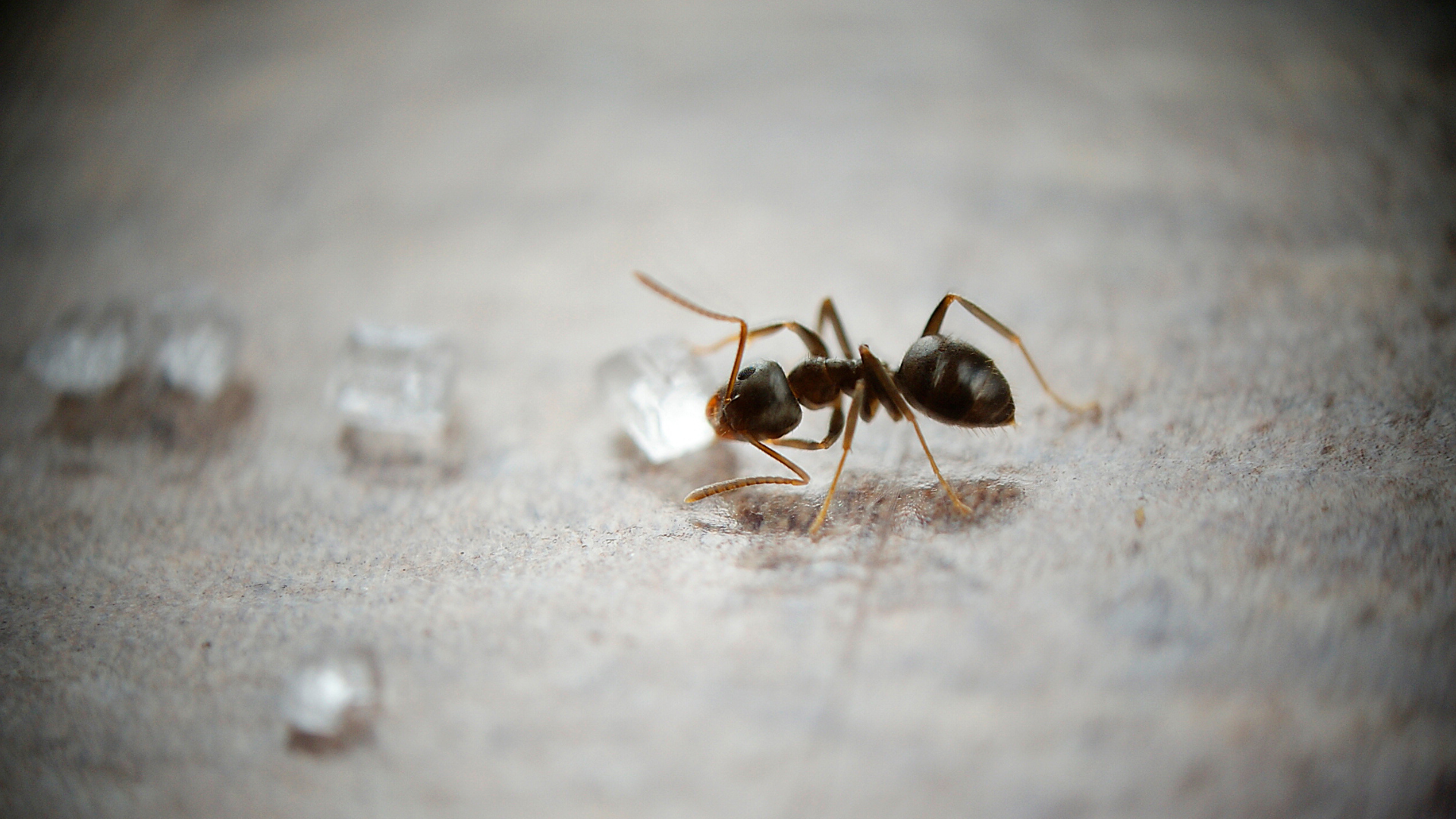
What Ants Are Considered Sugar Ants in Maryland?
Sugar ants are a category of ants that seek out sugar or high-carbohydrate foods inside your home. The most common ants in Maryland that qualify as sugar ants are:
- Pharaoh Ants: Pharaoh ants are tiny yellow or light brown ants known for their preference for sugary foods and moisture-rich environments. They often build nests in difficult-to-reach areas, making them hard to control, and they can spread diseases such as salmonella by contaminating food.
- Odorous Ants: Odorous ants, also known as “odorous house ants,” emit a foul, rotten coconut-like odor when crushed, hence their name. They are attracted to sugary substances and are commonly found trailing along kitchen countertops and around food sources.
- Pavement Ants: Pavement ants are dark brown to black ants that nest under pavement, rocks, and in cracks in concrete. They are attracted to sweets and proteins and are often found foraging for crumbs and spills in kitchens and pantries.
- Carpenter Ants: While carpenter ants primarily feed on protein-rich foods like insects and dead animals, they are also attracted to sugary substances. Unlike other ants on this list, carpenter ants can cause structural damage to homes as they excavate wood to build their nests.
The persistence of these pests is supported by substantial scientific research. Research published in PMC highlights that ants in the genus Camponotus (which includes local carpenter ants that also seek sugars) are biologically driven to prioritize high-carbohydrate resources to ensure colony longevity.
Furthermore, behavioral studies have shown that once a single scout identifies a food source—be it a drop of syrup or a stray crumb—it uses complex pheromone trails to recruit the rest of the colony within minutes. This rapid mobilization is why a “small” ant problem in a Maryland kitchen can transform into a full-scale infestation overnight.
Are Sugar Ants Dangerous or Harmful?
Sugar ants pose a significant problem for Maryland homeowners because they spread disease and compromise home hygiene.
For instance, Pharaoh Ants are known vectors for spreading diseases such as Salmonella, as they crawl across food-preparation surfaces and open containers. Their small size allows them to penetrate even the tightest seals. Once a scout identifies a food source, they use pheromone trails to recruit thousands of workers, turning a small sighting into a full-scale infestation.
Carpenter ants excavate galleries within wooden beams and wall studs to expand their nests. If provoked by ineffective surface sprays, they can undergo budding, where the colony splits and retreats deeper into your home’s framework.
Over time, this silent activity causes significant structural weakening that is incredibly costly to repair, making it the most destructive ant in Maryland.
When Are Sugar Ants Most Active in Maryland?
In the Mid-Atlantic climate, sugar ant activity typically surges in the spring as temperatures rise by about 50°F and heavy rains drive colonies indoors in search of dry ground and stable food sources.
While their lifespan varies—workers live a few months and queens for years—they can remain active year-round if they establish a nest within the warmth of your home’s walls. According to entomological research, these ants are biologically programmed to prioritize high-carbohydrate resources to ensure the survival of their massive colonies, which is why your pantry becomes their primary target.
While activity peaks during the humid summer months, many species will remain active well into October, or even year-round if they manage to establish a nest within the climate-controlled portions of your home.
Signs of Sugar Ants in Your Maryland House
To identify a potential infestation before it becomes a structural or sanitary hazard, look for these specific indicators of ant activity around your Maryland property:
- Active Foraging Trails: The most obvious sign is a steady, disciplined line of ants marching between a food source and their nest. In Maryland kitchens, these trails typically lead toward sugary residues, pet food bowls, or unsealed pantries.
- Heat and Moisture Zones: Sugar ants are drawn to warmth and humidity. Focus your inspection on common nesting sites, including baseboards near appliances, gaps in flooring, and areas surrounding copper piping or utility lines that disappear into wall voids.
- Exterior Satellite Nests: Many infestations begin outdoors before migrating inside during heavy rains. Check for active colonies tucked under landscaping stones, garden mulch, or patio walkways; these serve as staging grounds for workers entering your home.
- Frass and Wood Debris: If you suspect Carpenter Ants, look for “frass,” a sawdust-like substance that these ants eject from their galleries. Finding small piles of wood shavings near windowsills or joists is a primary indicator of structural excavation.
- The “Rotten Coconut” Odor: If you crush an ant and notice a distinct, unpleasant smell similar to rotting coconut, you are dealing with Odorous House Ants. This chemical defense mechanism is a foolproof way to identify this specific, pervasive Maryland species.
How To Get Rid of Sugar Ant Infestations in Maryland
Our field research confirms that the best way to prevent sugar ants in Maryland homes is through a combination of exclusion, baiting, and ongoing monitoring. By implementing the following exterior and interior prevention measures, you can deter future infestations and prevent satellite colonies from gaining a foothold in your home:
- Seal Entry Points: Conduct a thorough perimeter check and use silicone-based caulk to seal cracks, gaps, and holes where ants might enter.
- Manage Vegetation: Keep tree limbs trimmed away from your roofline and maintain shrubbery so it doesn’t touch windows or siding, removing natural pathways into your home.
- Inspect Firewood: Store firewood well away from the foundation and inspect every log for hitchhiking ants before bringing them indoors.
- Sanitize Surfaces: Keep countertops and floors free of crumbs and sticky residues, as even a small spill can trigger a massive foraging response.
- Secure Food Storage: Move dry goods from cardboard boxes into airtight glass or hard plastic containers to eliminate scent trails.
- Manage Waste: Keep indoor trash in sealed bins and empty them daily. Ensure outdoor cans are stored away from the house with tight-fitting lids.
- Eliminate Moisture: Fix leaking pipes and address drainage issues in your landscape to remove the standing water sources that sugar ants depend on.
While DIY bait stations can offer temporary relief, they often lack the potency required to neutralize a large-scale, established colony.
Because Maryland’s climate and diverse ant species pose year-round challenges, the most reliable way to ensure a pest-free home is to invest in a professional prevention plan that delivers expert-grade treatments and regular monitoring to stop infestations before they start.
FAQs
What is the lifespan of a sugar ant?
The lifespan of a sugar ant can vary depending on factors such as species, environmental conditions, and available food sources. On average, worker ants may live for several weeks to a few months, while queens can live for several years.
What are the natural repellents for sugar ants?
There are several natural repellents for sugar ants that include:
- Vinegar: Create a vinegar and water solution to spray on ant trails and entry points.
- Citrus peels: Place citrus peels near entry points to deter ants.
- Essential oils: Peppermint, lemon, or cinnamon essential oils can be diluted and sprayed as a natural ant repellent.
How do sugar ants enter homes?
Sugar ants can enter homes through tiny cracks and openings in walls, windows, doors, and foundations. They are attracted to the scent of food and moisture and will seek out entry points to access these resources.
Why do I see more sugar ants after it rains?
Heavy rains in the Mid-Atlantic climate often drive ant colonies indoors as they seek dry ground and stable food sources. Additionally, excessive moisture can wash away outdoor food sources, prompting ants to forage inside your home’s “climate-controlled” environment.
Can I use sprays to kill sugar ants?
While surface sprays might kill the ants you see, they are often ineffective for long-term control. Sprays can cause “budding,” where a colony (like Carpenter Ants) splits and retreats deeper into your home’s framework. They also fail to reach the satellite nesting sites where the majority of the colony resides.
Are sugar ants and carpenter ants the same thing?
In Maryland, “sugar ant” is a catch-all term that includes Carpenter Ants because they are attracted to sugary substances. However, Carpenter Ants are unique in that they can cause significant structural damage by excavating wood to build their nests, unlike typical nuisance ants.
How quickly can an ant infestation grow?
An infestation can escalate almost overnight. Once a single scout ant identifies a food source, it uses complex pheromone trails to recruit the rest of the colony within minutes. This rapid mobilization is why a single crumb can trigger a massive foraging response.
What is the most common sign of a sugar ant problem?
The most obvious indicator is an active foraging trail: a disciplined line of ants marching between a food source (like a pet bowl or unsealed pantry) and their nest. You may also notice a distinct “rotten coconut” smell if you crush an Odorous House Ant.