

To eliminate bed bugs in Baltimore, bed bug control experts combine targeted chemical applications, biopesticides, and K-9 scent detection tailored to each infestation.
Baltimore’s proximity to the PATCO transit corridor and Philadelphia creates a higher concentration of bed bugs in the area. Because of this, experts need to take special steps to eliminate bed bugs at all life stages–unlike DIY sprays–to stop infestations as quickly as possible.
This article explains each step of professional treatments, how they work, how long they take, and how to prepare for visits. This way, you know what to plan for if you run into a bed bug problem in your own home.
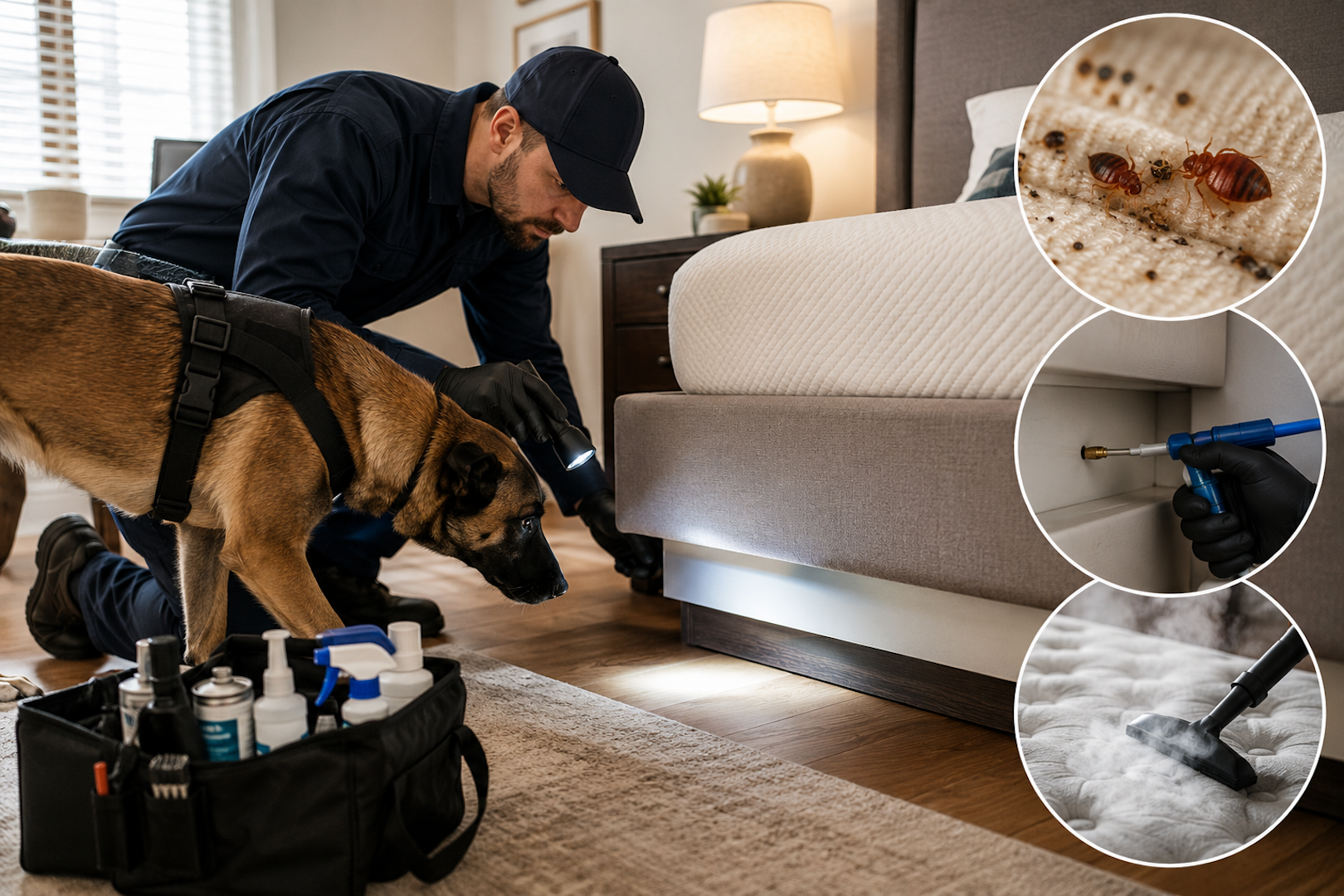
Step 1: K-9 Scent Detection
The first and most important step is finding every active infestation site in the house. While human visual inspections are good in some cases, K-9 detection is far more effective.
According to research published in the Journal of Economic Entomology, trained detection dogs can locate bed bug hiding spots with up to 95% accuracy, compared with humans’ 30% accuracy.
High accuracy is important in Baltimore homes, as bed bugs don’t limit themselves to bedding. These tiny insects can hide in:
- Baseboards
- Upholstered furniture
- Electrical outlets
- Wall voids
- Floorboard seams
- Adjacent units
Pinpointing bed bug hiding locations helps experts better assess the severity of the infestation and determine the next steps.
Step 2: Pre-Treatment Preparation
Homeowners need to take steps to help prepare for treatments. Otherwise, there’s a chance experts won’t get all the bed bugs, leading to additional follow-up treatments.
Before bed bug treatments, homeowners should:
- Wash all bedding, linens, and clothing in hot water
- Dry items on high heat for at least 30 minutes
- Bag cleaned items in sealed plastic bags
- Reduce clutter near sleeping areas
- Pull beds and furniture away from walls
- Vacuum visible debris thoroughly
- Clear technician access to baseboards, outlets, and furniture seams
Step 3: Treatment Application
After inspection and prep are complete, the expert will begin treatments. In Baltimore, two primary approaches are taken:
Targeted Chemical Treatment
Professional-grade bed bug treatments often use insecticides applied into crevices, cracks, bed frames, and anywhere else these insects hide.
These carefully-selected products use multiple active ingredients to address pyrethroid-resistant bed bug populations. The goal is to kill bed bugs where they hide to stop the problem as quickly as possible.
Aprehend Bed Bug Treatment
Another specialized option is Aprehend bed bug treatment. This EPA-registered biopesticide uses Beauveria bassiana fungal spores to kill bed bugs, bypassing pyrethroid resistance.
When the insect crosses treated surfaces:
- Spores attach to the insect’s outer shell
- The fungus germinates
- The bug dies within several days
- Infected bugs can spread spores to other bed bugs through contact
Heat treatments may also be used in certain structures. However, it’s less commonly used in Baltimore row homes where structural complexities make it difficult to achieve full heat penetration.
Step 4: Follow-Up Treatment and Monitoring
Professional bed bug treatment is rarely a one-visit process. In most cases, it’ll require two to three visits over a 30-day period.
Bed bug eggs often survive the first wave of treatment, typically hatching within six to ten days. Follow-up visits target the hatchlings before they can reproduce.
Typical expert treatment plans include:
- Initial inspection and treatment
- Follow-up visit at approximately 2 weeks
- Third treatment if needed around 4 weeks
- Final K-9 clearance inspection
How Long Does Bed Bug Treatment Take?
Homeowners asking how long bed bug treatments take are generally asking two questions. First, how long the individual visits take, and second, how long the entire process lasts.
The specific timeframe for bed bug treatments depends on the severity of the infestation and the size and complexity of the property. In most instances, the following durations are typical:
- Initial inspection: 30 to 60 minutes
- First treatment visit: Two to four hours
- Second visit: About two weeks later
- Third Visit (if needed): Another two weeks later
- K-9 Clearance Inspection: Four to six weeks after treatments start
In total, professionals will spend about one to two days working in the home and the entire process should take no longer than 30 to 45 days.
It’s important to remember to give experts as much time as is needed to stop infestations, as every situation is unique and rushing through or skipping stages only makes it easier for populations to bounce back.
Why DIY Bed Bug Treatment Fails in Baltimore
DIY bed bug methods fail because they rely on pyrethroid products that some populations are resistant to, and they rarely reach hidden harborage.
Studies have documented widespread pyrethroid resistance in bed bugs. Some have developed thicker protective cuticles that reduce insecticide penetration. This is why carefully selected professional-grade pesticides are so important.
Tactful application is also critical because DIY methods often only address visible bed bugs, driving many into hiding without killing them.
While they may seem to be the ultimate solution, the EPA explicitly advises against the sole use of total-release foggers for bed bug control because they don’t effectively penetrate hiding spaces.
Professional treatments succeed because experts use the proper detection methods for inspection, followed by an effective plan and the use of products that guarantee results.
FAQ
How do exterminators get rid of bed bugs?
Professional bed bug exterminators use K-9 detection to identify harborage and targeted insecticides or fungal biopesticide treatments to eliminate bed bugs. Treatments are typically applied in one to two visits, with additional follow-ups as needed.
How long does bed bug treatment take?
The initial inspection takes 30 to 60 minutes, with each treatment lasting two to four hours. Altogether, the process typically takes 30 to 45 days, with a total of one to two days working in the home.
Do I have to leave my home during bed bug treatment?
Yes. Residents and pets are required to leave the home for two to four hours while products dry and settle. Your technician will provide exact re-entry guidance before service.
What do I need to do to prepare for bed bug treatment?
Clean the home and wash any curtains and clothing in hot water, drying on high heat for at least 30 minutes. Declutter floors, move furniture from walls, and provide clear access to bedding and sleeping areas
Does one treatment get rid of bed bugs?
Rarely. Bed bugs lay eggs that often survive treatment that hatch within six to ten days, which is why follow-up visits that target the hatchlings are often necessary.
Why don’t store-bought sprays kill bed bugs?
Retail sprays often rely on pyrethroids, to which some populations of bed bugs are resistant. Additionally, DIY methods often only target visible bed bugs that simply go into hiding, surviving the attempt. Professional treatments. Professional treatments use targeted products and application methods designed to overcome resistance.
Are bed bugs covered under Maryland rental law?
Yes. Maryland habitability law requires landlords to maintain habitable conditions, which includes addressing pest infestations. Tenants have remedies when landlords fail to act.
What is Aprehend and how does it work for bed bugs?
Aprehend is a fungal biopesticide containing Beauveria bassiana spores. It’s applied to targeted surfaces, allowing spores to attach to bed bugs, germinate, and kill them within several days. It can spread between bugs as well, magnifying its effectiveness.
How do I know when bed bugs are completely gone?
Professionals rely on K-9 clearance inspections performed weeks after completing treatment. Detection dogs can locate live bugs and viable eggs far better than humans, which is why this is a standard part of treatment plans in Baltimore.