

Preventing cockroaches from entering your Maryland home starts with sealing structural entry points and eliminating food crumbs and scraps that attract them.
German cockroaches are the most common pests in Maryland, responsible for carrying parasitic worms, triggering allergy symptoms in children and older adults, and foodborne illnesses, such as gastroenteritis and dysentery.
According to the National Pest Management Association, 63% of homes in the United States contain some residual cockroach allergens, with even higher percentages in urban areas like Baltimore and Washington, D.C.
All cockroach species are drawn to dark, damp spaces with easily accessible waste.
In many instances, your mulch garden bed or wet leaf pile can serve as an outdoor nest for a roach colony, allowing them to easily migrate indoors through any accessible crack in your foundation.
Therefore, cockroach prevention requires an all-in-one approach that includes lawn management, structural exclusion, and indoor moisture management.
In this guide to Maryland cockroach prevention, you will learn how to stop cockroaches from infesting your private spaces, step-by-step, with helpful information on species identification and what attracts roaches to your home.
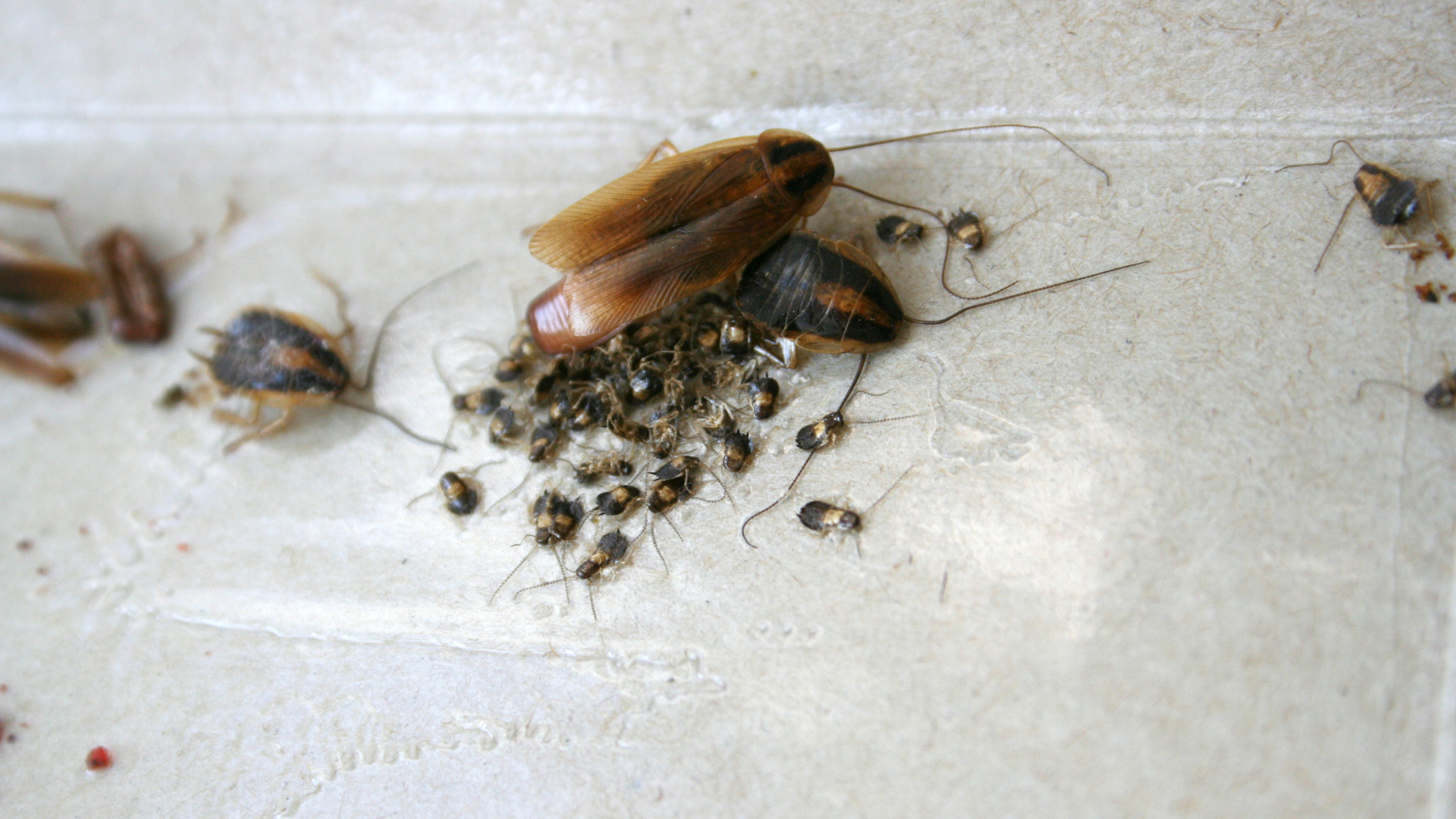
What Attracts Cockroaches to Your Home?
Cockroaches enter your home primarily in search of organic waste, standing water or excess moisture, and dark, cluttered shelter.
These pests are opportunistic survivors that naturally gravitate toward environments that provide easy access to nourishment and a protected breeding space.
- Food and Organic Waste: Cockroaches possess an exceptionally keen olfactory system that detects odors from exposed garbage, dirty dishes left in the sink overnight, counter crumbs, and unsealed pet food. As omnivorous scavengers, their diet extends far beyond human food; they readily consume grease films on stovetops, the starch adhesives in cardboard boxes and book bindings, and paper packaging.
- Moisture and High Humidity: Water is an absolute necessity for cockroach survival, often dictating where an infestation establishes itself. High-moisture zones such as leaky kitchen or bathroom pipes, damp basements, humid crawlspaces, dripping air-conditioning units, and condensation pans beneath major appliances provide the vital hydration stations required for their survival.
- Secure Cover and Clutter: Cockroaches are nocturnal and thigmotropic, meaning their biology compels them to seek out tight spaces where their bodies can make contact with surfaces on all sides. Piles of unused cardboard boxes, stacks of old newspapers, cluttered closets, and the narrow gaps behind heavy appliances or inside wall voids offer the ideal dark, undisturbed shelters they require to hide and breed safely.
Dangers of Prolonged Cockroach Exposure in Maryland
Cockroaches act as carriers for harmful bacteria, airborne allergens, and parasitic organisms that contaminate living spaces and threaten your well-being.
Eliminating and preventing cockroaches is essential to protect your family from severe illnesses, chronic respiratory issues, and continuous indoor contamination.
- Foodborne Illnesses: Cockroaches crawl through unsanitary environments like sewers, drains, and garbage. They pick up dangerous bacteria on their legs and bodies, transferring pathogens directly onto countertops, food preparation areas, and utensils. This mechanical transmission spreads illnesses like gastroenteritis, dysentery, Salmonella, and E. coli.
- Asthma and Allergy Triggers: The shed skins, feces, and decaying bodies of cockroaches produce potent airborne allergens. Inhaling these microscopic proteins triggers intense allergic reactions and is a leading cause of severe asthma attacks, especially in children and the elderly.
- Parasitic Worms: Roaches carry the eggs of parasitic worms both internally and externally. When they forage through pantries or walk over exposed food, they can deposit these larvae, creating an immediate risk for secondary intestinal infections in human occupants and domestic pets.
In addition to physical health risks, a cockroach infestation causes significant mental strain, anxiety, and sleep disruption.
Katsaridaphobia, or fear of cockroaches, is one of the most common phobias among humans and is biologically encoded into our DNA.
Signs You Have a Cockroach Infestation
The most common signs of a German or American cockroach infestation in Maryland is spotting cockroach droppings or smelling a foul odor.
Roaches are nocturnal and hide during daylight hours; recognizing these physical signs is the most reliable way to confirm their presence before spotting a live insect.
- Cockroach droppings (can resemble ground coffee or pepper)
- Cockroach eggs
- Foul, musty odors
- Chew marks on household items
- Smear marks on walls and surfaces
- Live cockroaches seen at night
You can physically check for cockroaches at night with a flashlight behind furniture and in attics or basements to uncover any hiding spots.
If you do spot a live roach during daylight hours, then chances are that you have an overgrown infestation that is forcing other roaches to compete for shelter within a crowded part of your home.
How to Prevent Cockroaches: Step-by-Step
Prevention is the best way to eliminate cockroaches, as they are notoriously difficult to eliminate without professional intervention.
Here are several steps you can take to ensure your home is not subject to additional infestation.
1. Seal Cracks
Cockroaches possess flexible exoskeletons that allow them to squeeze through gaps as thin as a credit card.
Apply a high-quality silicone caulk to seal cracks along baseboards, window frames, and foundation lines, and use expanding spray foam to block larger voids around plumbing stacks and utility penetrations.
2. Eliminate Clutter
Getting rid of any unnecessary junk or clutter around the house will help you get rid of cockroaches. The logic is simple: by giving them fewer places to hide, they will be less inclined to stick around your home.
Even clutter like cardboard boxes, loose papers, and other random items should be properly stored and removed from the floor to prevent cockroaches from entering your home.
3. Properly Store Food
Exposed organic matter acts as a primary attractant for foraging scout roaches looking to feed an expanding colony. Store all human and pet food in airtight glass or plastic containers, sweep up kitchen crumbs immediately, and avoid leaving dirty dishes in the sink overnight.
4. Clean Up the Landscaping Outside Your Home
Poor landscaping outside your home can attract cockroaches, and these pests can eventually make their way inside your home in search of shelter during the cold winter months. To prevent this from happening, keep your grass cut to an appropriate length, and pull any weeds or overgrown vegetation on your property.
Additionally, clear wet leaf piles or heavy mulch layers directly next to your home.
5. Get Rid of Excess Moisture
Cockroaches are drawn to excess moisture, so be sure to keep an eye on any leaking faucets or pipes to keep these pests away. You can get rid of excess water in your home by using a wet vac or running a humidifier in your basement or attic. You should also be sure to get any leaking faucets or pipes repaired as soon as you discover them to keep cockroaches from invading your space.
6. Keep Trash Contained
Keep all trash in your home properly sealed to prevent these pests from finding it. This also applies to the trash cans outside your home, where cockroaches can swarm them. Tie all trash bags before taking them to the curb, and remember to do so so they don’t sit out for a long time.
7. Consider Your Location
Homeowners who live in more urban areas may find that they see cockroaches more than the average person, as these pests are more prevalent in large cities. They often make their way into apartments and row homes by crawling through connecting walls, so if your neighbor has cockroaches, there is a good chance you may eventually get them, too.
The best way to combat roaches immediately is with a quarterly pest control plan from a local exterminator that covers cockroach control.
When Should You Call an Exterminator for Cockroaches?
If you suspect you may be dealing with a cockroach infestation, it is imperative that you contact a pest control company immediately. Not only do cockroaches multiply very quickly, but they are notorious for being extremely difficult to get rid of, and DIY solutions just aren’t strong enough to handle an infestation so severe.
A trusted pest control specialist will be able to inspect your home to determine the level of infestation you’re dealing with and create a unique plan of action to eliminate the problem.
FAQs
How common are cockroaches?
Cockroaches are some of the most common household pests in the United States. In fact, it is estimated that 63% of homes contain cockroach allergens, according to the National Pest Management Association.
Having cockroaches isn’t necessarily indicative of a dirty home, as many people may see a cockroach or two depending on where they live or if their neighbors are dealing with an infestation. However, you can reduce your risk of a cockroach infestation by cleaning regularly and properly storing food and garbage.
How do you identify cockroaches?
There are several different types of insects that can be mistaken for cockroaches at first glance, so it is important to be able to recognize a true cockroach. Cockroaches have a wide, flat, oval body and are typically light brown or tan. They have six legs and antennae, which are responsible for their sense of smell.
What problems do cockroaches cause?
Cockroaches are known to be an allergen trigger for many people and can even trigger asthma in some. They can also carry bacteria that can be harmful to humans when consuming food that cockroaches have come into contact with.
Can cockroaches survive being stepped on?
Cockroaches can frequently survive being stepped on due to their highly flexible, resilient exoskeletons. Their biological structure is capable of compressing and enduring forces up to 900 times their own body weight without crushing. To ensure elimination, it is necessary to use physical traps or targeted insect growth regulators rather than relying on crushing them.
Do cockroaches bite humans?
Cockroaches rarely bite humans and will generally only do so in cases of extreme, overcrowded infestations where their primary food sources have been completely exhausted. If a bite does occur, it typically happens overnight on the hands, feet, or face, and requires immediate sanitation to prevent secondary bacterial infections from their saliva.
Why do I see cockroaches after a heavy rain?
You see cockroaches indoors after heavy rain because rising water levels and saturated soil flood their natural outdoor nesting habitats, such as mulch beds and sewer lines.
To avoid drowning, species like the American cockroach migrate upward and inward through foundation cracks and drains to seek dry shelter. Implementing perimeter exclusion and structural sealing is crucial to blocking this weather-driven migration.