

Hantavirus Pulmonary Syndrome (HPS) is relatively rare in Maryland. Only a small number of confirmed cases were recorded during the CDC’s surveillance period, and there’s never been a sustained outbreak in the state.
However, recent reports of an outbreak of the Andes strain on cruise ships have raised public alarm across Maryland, as homeowners remain susceptible to hantavirus without proper precautions.
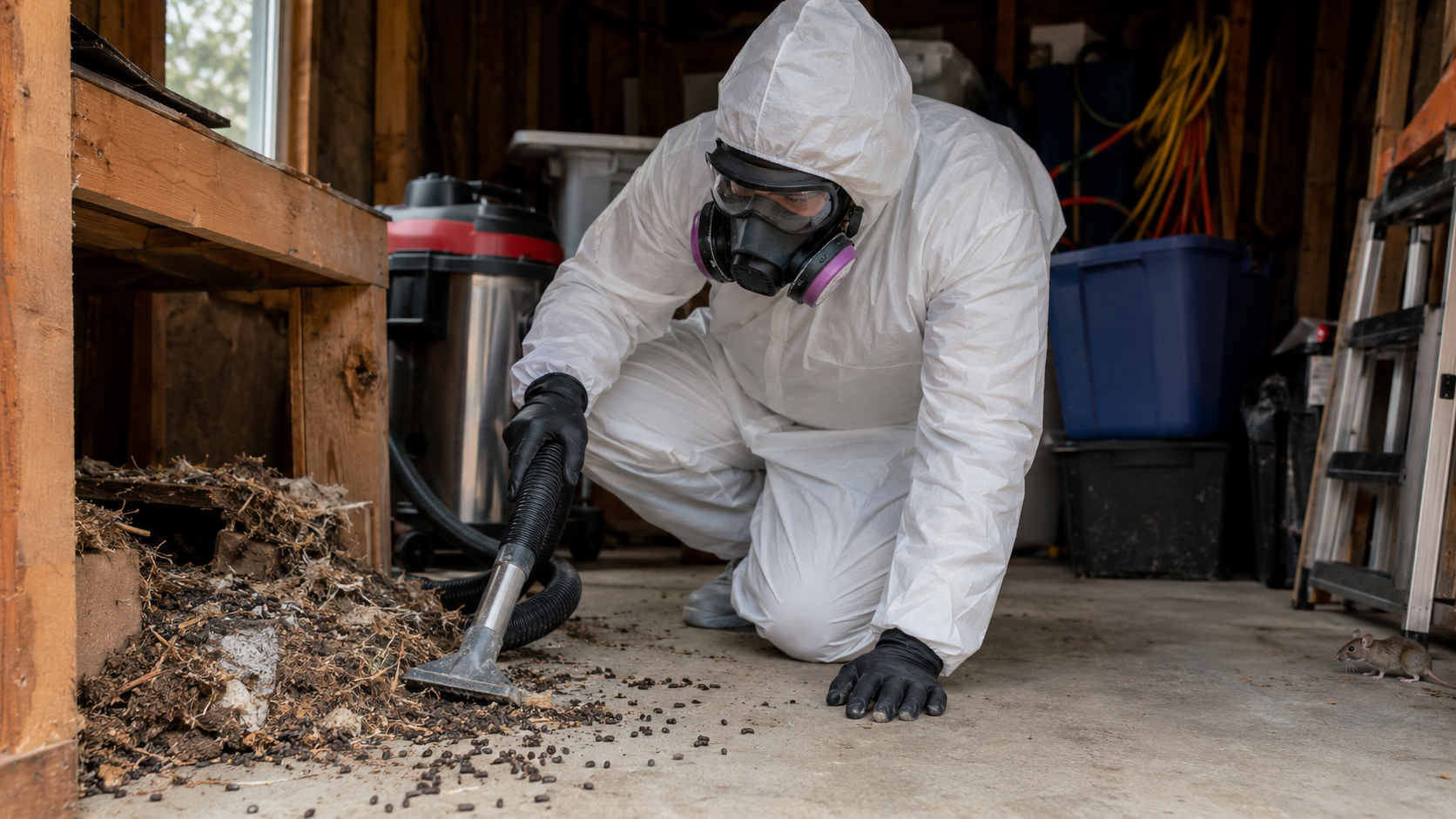
The number one way that rodent-borne diseases like hantavirus are transmitted is through aerosolized rodent droppings that are activated when cleaning them up with a broom or vacuum.
For this reason, it’s essential to use proper equipment, like a respirator mask and a HEPA-equipped vacuum designed for hazardous waste disposal.
When dealing with any type of rodent, it’s important to contact a rodent control professional equipped for hazardous cleanup and who can offer rodenticides guaranteed to stop indoor rodent activity.
In this guide, you’ll learn how common hantavirus is in Maryland, how it’s contracted, and ways to reduce your risk of rodent-borne diseases.
How Many Hantavirus Cases Are in Maryland?
Only a small number of confirmed hantavirus cases have been reported in Maryland over several decades of monitoring, with the last reported in 2019.
CDC surveillance data ranks Maryland among the lowest-incident states in the US.
Hantavirus is most common in the Southwest, particularly in the Four Corners region (New Mexico, Arizona, Colorado, and Utah), where deer mouse populations are abundant.
Environmental factors also support higher levels of hantavirus transmission in this region.
Most reported exposures in Maryland are linked to specific circumstances involving closed structures with rodent infestations or people who have been traveling.
The primary Peromyscus species in Maryland is the white-footed mouse, which is the primary vector of hantavirus in the state.
While reports are low, it is still possible for this species to transmit Hantavirus, as is the case for deer mice in Maryland.
How Do You Contract Hantavirus?
Hantavirus Pulmonary Syndrome is typically transmitted by breathing in aerosolized particles from infected rodent waste and nesting materials.
Exposure becomes a concern when waste is disturbed, sending particles into the air.
Common exposure scenarios include:
- Cleaning sheds with heavy rodent activity
- Opening seasonal cabins after long periods of vacancy
- Cleaning barns or outbuildings
- Disturbing rodent nests in attics or crawl spaces
- Sweeping or vacuuming dry mouse droppings
Contrary to popular belief, rodents do not transmit hantavirus through bites, and person-to-person transmission has not been documented for the Sin Nombre virus strain linked to most HPS cases in Maryland.
The most common source of exposure is travel or vacuuming up rodent droppings, which is why it’s essential to contact a professional at the first sign of a rodent.
Symptoms of Hantavirus Exposure
Hantavirus is an extremely deadly illness, with HPS having a 38% fatality rate among US cases. It is among the most serious rodent-borne diseases in America, and there is no antiviral treatment.
Medical care focuses on supportive treatments, typically in an intensive care unit.
Early symptoms often resemble the common flu, which can make diagnosis difficult.
Initial symptoms start to set in one to five days after exposure, typically including:
- Fever
- Fatigue
- Severe muscle aches
- Headache
- Dizziness
- Nausea
- Vomiting
- Abdominal discomfort
Symptoms continue to develop after the initial stages. Four to seven days after illness sets in, infected people may begin to experience the following:
- Persistent cough
- Shortness of breath
- Chest tightness
- Rapid breathing
- Fluid accumulation in the lungs
The second phase can progress rapidly and requires immediate medical attention.
What Mice Carry Hantavirus in Maryland?
In Maryland, the primary vector of hantavirus is the white-footed mouse (Peromyscus leucopus), a species commonly found in wooded areas, brush piles, and around residential structures such as garages, sheds, crawl spaces, and outbuildings.
The deer mouse (Peromyscus maniculatus) is also present in the state and represents the species most commonly associated with hantavirus transmission across North America, serving as the classic reservoir for the Sin Nombre virus that causes Hantavirus Pulmonary Syndrome.
By contrast, while the common house mouse (Mus musculus) frequently infests indoor living spaces, it is not considered a documented hantavirus reservoir in the United States.
However, controlling house mouse populations remains essential due to the various other health and safety risks associated with indoor rodent infestations.
How to Reduce Hantavirus Risk at Home
Rodent exclusion is your best line of defense against hantavirus exposure. If mice can’t get in, risks drop dramatically.
Here are some steps you can take to reduce your risk of rodent-borne illnesses in Maryland.
Seal Entry Points
Mice can squeeze through openings as small as a dime, making thorough home sealing essential for rodent prevention. To effectively mouse-proof your property, inspect the exterior and seal common entry points such as foundation cracks, utility penetrations, pipe gaps, door gaps, weep holes, and vent openings.
Remove Rodent Harborage
Rodents prefer enclosed environments near food and water sources. You can limit attractants through the following steps:
- Moving woodpiles away from structures
- Trimming dense vegetation
- Removing brush piles
- Storing food in sealed containers
- Managing clutter in garages and sheds
Take Extra Precautions With Seasonal Structures
Structures that often go long periods without human activity, such as barns, cabins, and storage buildings, are very attractive to mice.
Before spending time inside, air out the building, check for signs of an infestation, and strictly follow CDC guidelines if you need to clean up droppings.
Consider Professional Rodent Exclusion
If you are dealing with a recurring mouse problem, professional exclusion is your best option. An expert can pinpoint hidden vulnerabilities, build a long-term control plan, and properly seal your home to eliminate your exposure to hantavirus and other rodent-borne health risks.
While hantavirus is a severe and potentially fatal respiratory illness, it remains exceptionally rare in Maryland, with only a tiny handful of cases documented over the past several decades.
Nevertheless, rodents can transmit several dangerous diseases, and by following these steps and consulting an exterminator, you can greatly limit your exposure.
FAQs
Is hantavirus common in Maryland?
No. Hantavirus is rare in Maryland. Only a small number of confirmed cases have been reported during the CDC surveillance period. The state has never experienced a sustained hantavirus outbreak.
How many hantavirus cases are there in Maryland?
Reports of HPS cases in Maryland are in the low single digits over the multi-decade CDC surveillance period. It is considered a low-incidence area, with the last reported case in 2019.
How do you catch hantavirus?
Hantavirus is typically transmitted by inhaling aerosolized infected rodent urine, droppings, saliva, and nesting material. Exposure often occurs when cleaning up in enclosed areas, where particles fill the air.
What are the symptoms of hantavirus?
Early symptoms are flu-like, including fever, fatigue, headache, nausea, and muscle aches. Four to seven days in, severe respiratory symptoms can develop as fluid accumulates in the lungs.
What mice carry hantavirus in Maryland?
The white-footed mouse is the primary reservoir of concern in Maryland. Deer mice also carry it, typically residing in western Maryland; they are the classic reservoir species associated with Sin Nombre virus transmission.
Can you get hantavirus from a mouse in your house?
Potentially, yes. The risk occurs when infected rodents are present and droppings or nesting materials are disturbed without proper precautions. Exposure risk increases in enclosed areas with significant rodent activity.
How do you safely clean up mouse droppings?
Do not sweep or vacuum. Open windows and ventilate the area for at least 30 minutes. Wear gloves and a respirator whenever in the area. Disinfect droppings with a bleach solution, and carefully remove materials using disposable towels.
Is hantavirus fatal?
It can be. Hantavirus Pulmonary Syndrome is a serious disease with a significant fatality rate among confirmed cases. However, it remains extremely rare in Maryland.
What is the best way to prevent hantavirus?
Preventing rodent infestations is the most effective primary strategy. Seal entry points, eliminate harborages, store food properly, and follow CDC cleanup protocols whenever rodent activity is discovered. Working with pest control experts is recommended in high-risk properties.